
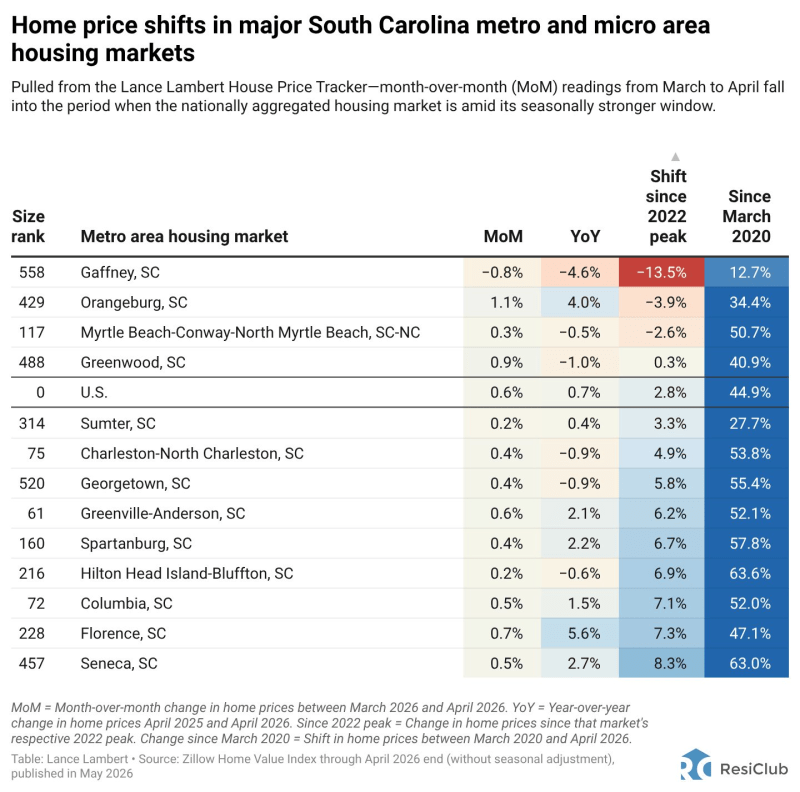
Source: Lance Lambert
Source: Lance Lambert
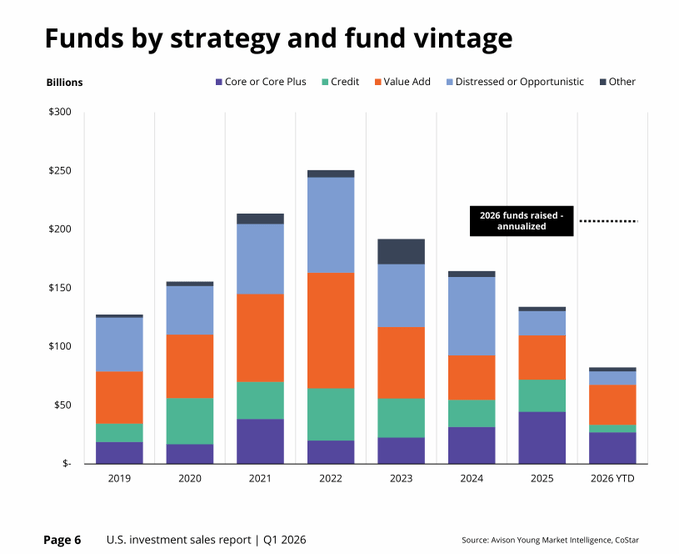
There’s been a collapse in distressed/opportunistic fundraising over the last few years as the wave of distress has not materialized (except in office), yet.
Source: Avison Young
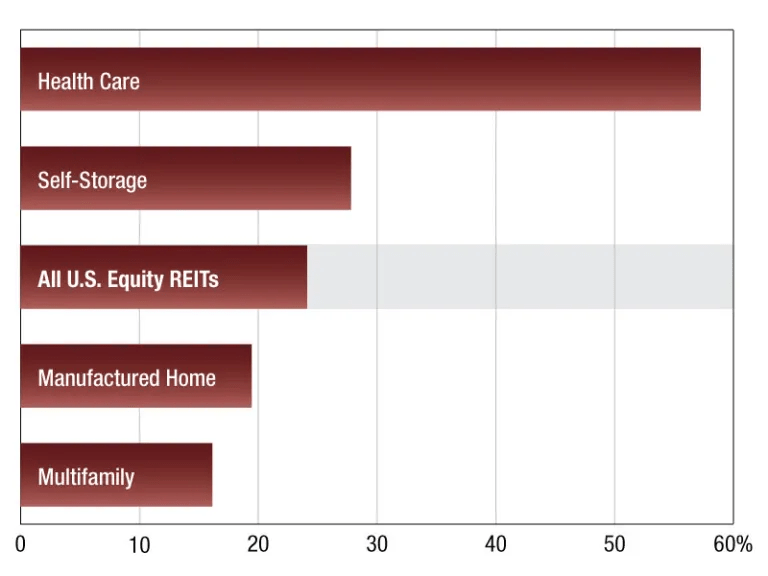
As of May 1, the health-care sector led all publicly traded U.S. equity REIT sectors in terms of the last twelve months funds from operations multiple. The sector posted a 57.24x LTM FFO multiple, outperforming the Dow Jones equity all REIT index by 33.13 percentage points.
The self storage and equity all REIT sectors followed with price to LTM FFO multiples of 27.82x and 24.11x, respectively.
The U.S. manufactured homes REIT sector ranked second to last with 19.45x with the apartment REIT index last with 16.14x.
Among the Multifamily REITs, Veris Residential Inc. was on top of the list with a 25.6x price to LTM FFO multiple, followed by Camden Property Trust and Equity Residential with a 16.8x price to LTM FFO multiples.
NexPoint Residential Trust, Inc. and Elme Communities were at the bottom of the list with a 11.5x and a 2.8x price to LTM FFO multiple respectively.
Source: Multi-Housing News
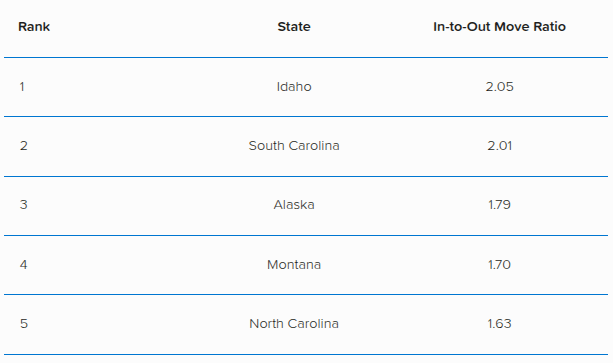
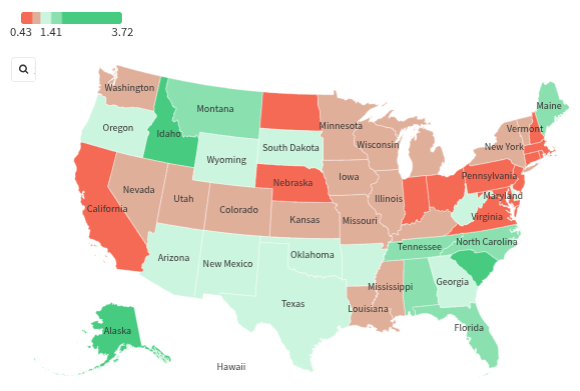
MoveBuddha examined 78,000 searches made in the first three months of 2026 to uncover the moving trends shaping 2026:

A heat map showing the most (green) and least (red) popular states in 2026:
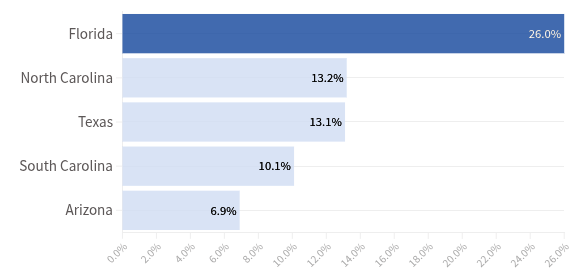
The 5 states with the highest net volume of searches for moves in:
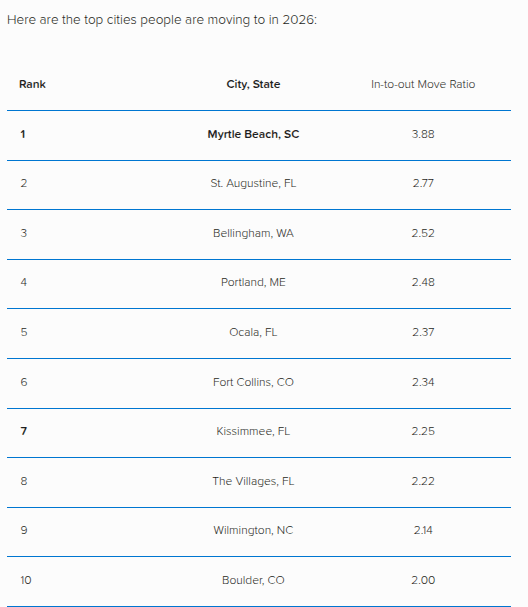
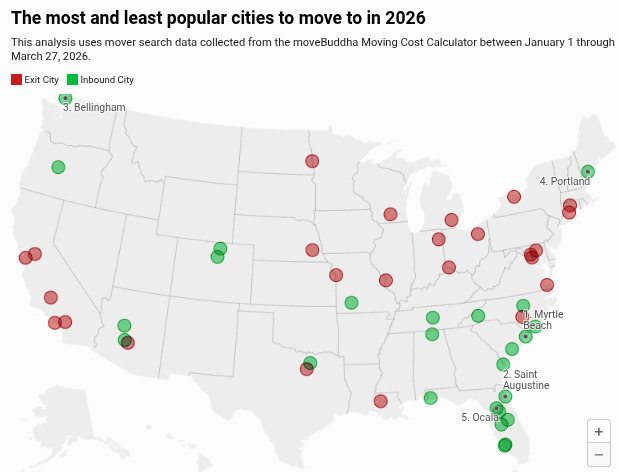
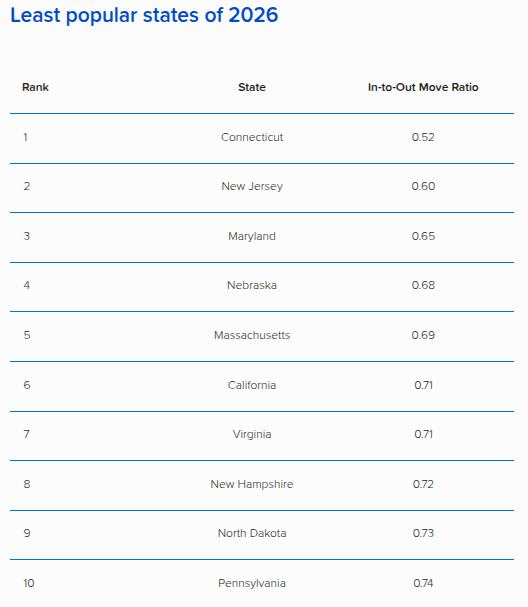
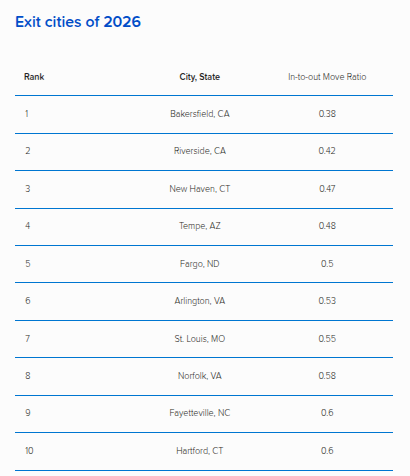
Source: MoveBuddha
The future of American cities is in the exurbs. The latest Census Bureau data show that some of the fastest-growing cities are often sitting in the distant orbit of a larger city and centered on booming master-planned communities.
North Carolina remains a growth hot spot. Its famed Research Triangle Park is flanked by Raleigh and Durham, which together had 812,000 residents as of mid-2025, up 9% since 2020. They are surrounded by smaller boomtowns, too, including Cary, Chapel Hill, Apex and Holly Springs. Collectively, eight of those communities grew 14% in the five years through mid-2025 to nearly 500,000 people.
Charlotte, N.C., with a population of almost 965,000, is near joining an exclusive club with just 12 members (including Austin, Texas, a brand new entrant): cities with more than one million people. Charlotte grew 2.2% in the last measured year, faster than any U.S. city with more than 500,000 people.
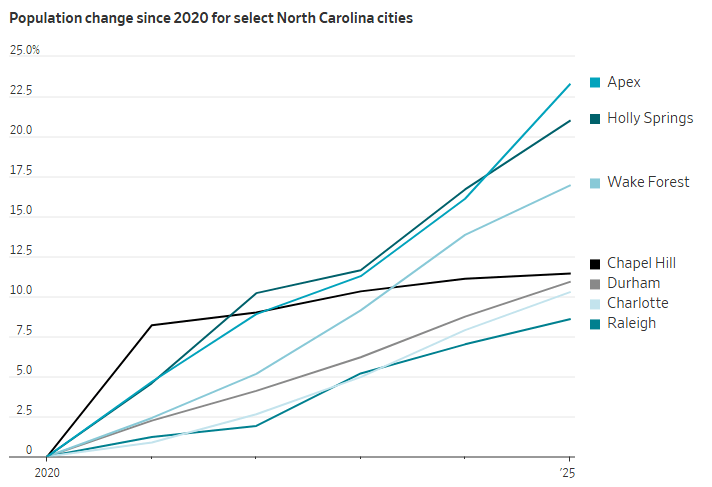
Source: Wall Street Journal
Nearly 61% of the nation’s build-to-rent (BTR) construction pipeline remains concentrated in the South as developers and investors keep the sector active in 2026.
Build-To-Rent includes:
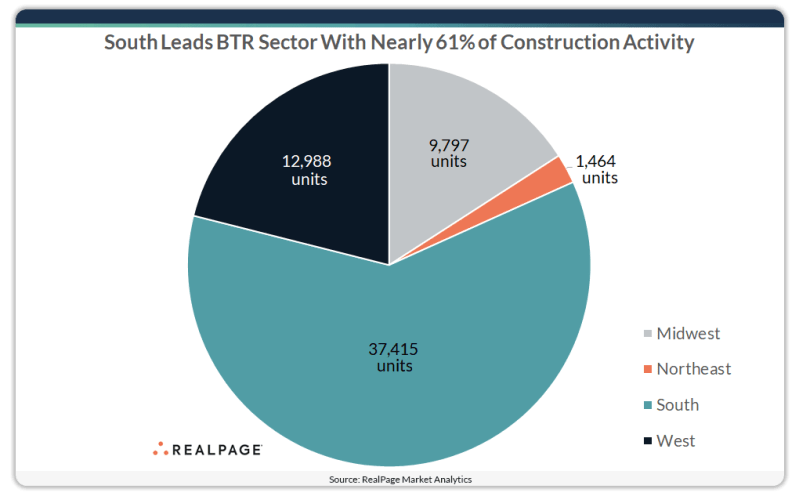
Nationwide, just 16 markets count 1,000 or more BTR units under construction, or about 63% of activity.
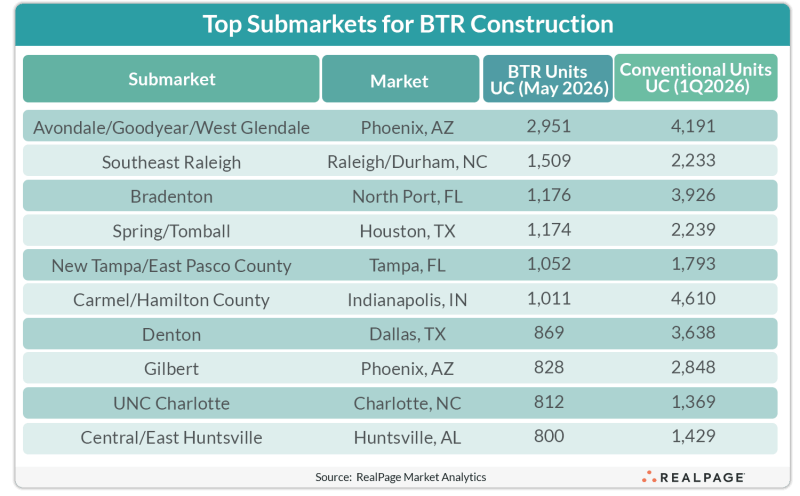
Source: RealPage
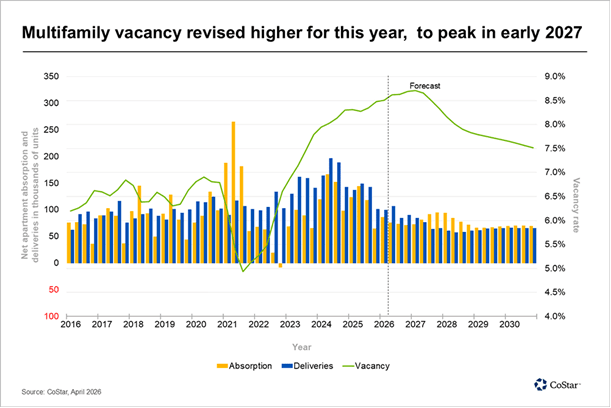
The new CoStar apartment vacancy forecast pushes recovery out six months to the back half of 2027. New supply is finally tapering, but absorption is forecast to be weaker than 2024–2025 on uncertain job growth.
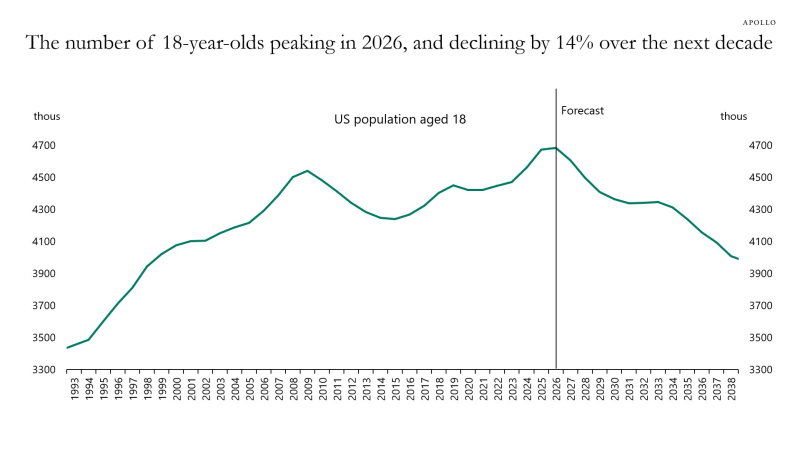
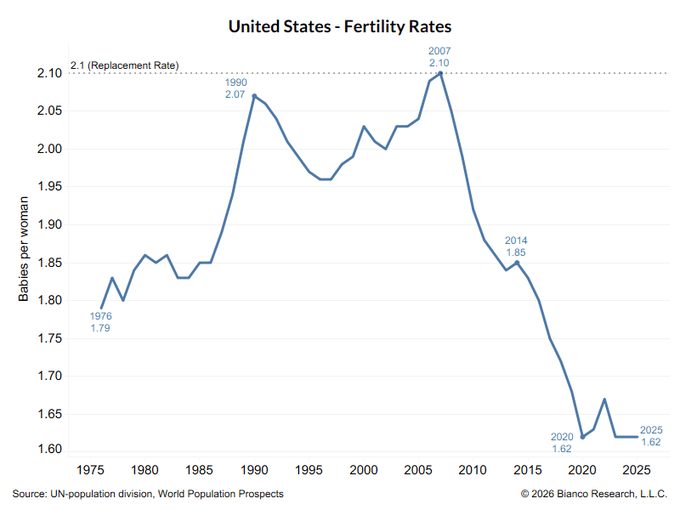
The decline in the number of 18-year-olds will begin to impact student housing immediately and then the broader multifamily market in four to five years.
Commercial real estate lenders are done pretending. After years of waiting and hoping that the market would improve, they’re selling off debt on struggling US assets, sometimes writing down as much as 85% of the loan’s payoff amount.
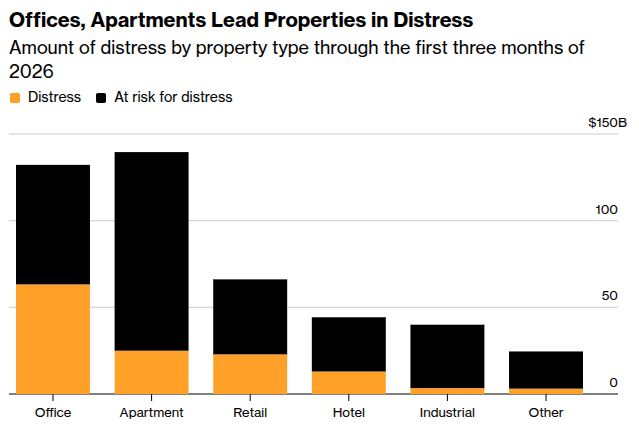
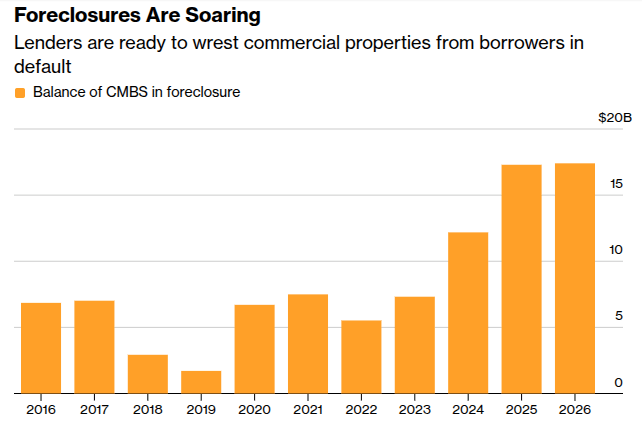
While some lenders are selling off troubled loans, others are moving faster to foreclose. In March, the balance of loans in commercial mortgage-backed securities tied to buildings in foreclosure reached $17 billion, up from $7 billion in 2024 and the highest level since the post-Great Financial Crisis resolution period, according to Trepp.
Parkview Financial recently foreclosed on a pair of apartment towers in Baltimore after the company that converted the former hotel buildings defaulted on its $45 million loan.
Source: Bloomberg
The combined total of new jobs among these top 10 markets (166,000 jobs) was almost 50% greater than their combined annual gains in February and 13.3% greater than one year ago:
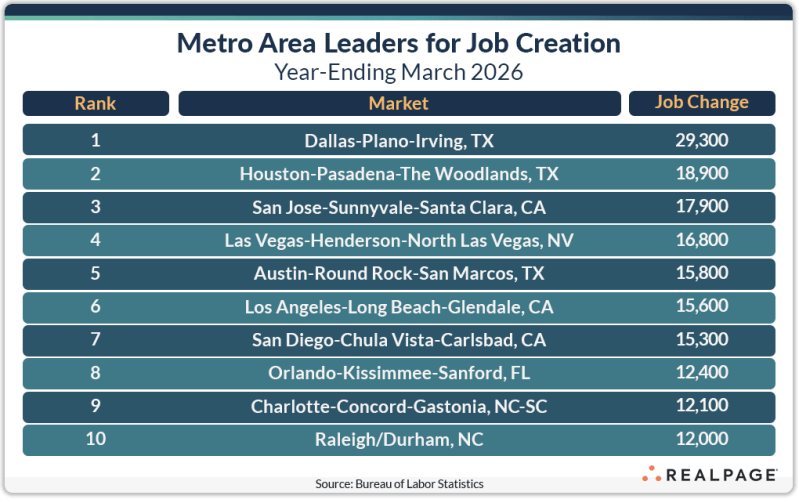
On the downside, the Northeast region is facing steep job cuts with 107,900 fewer jobs for the year in Washington, DC, and significant declines in New York, Boston, Baltimore and Philadelphia. The Midwest region was not spared from declining employment levels as Detroit, St. Louis, Milwaukee, Toledo and Pittsburgh also reported job cuts for the year-ending March.
Unlike the top job gain markets, which tend to be large in population and employment, smaller markets usually dominate the top markets for annual percentage change in employment.
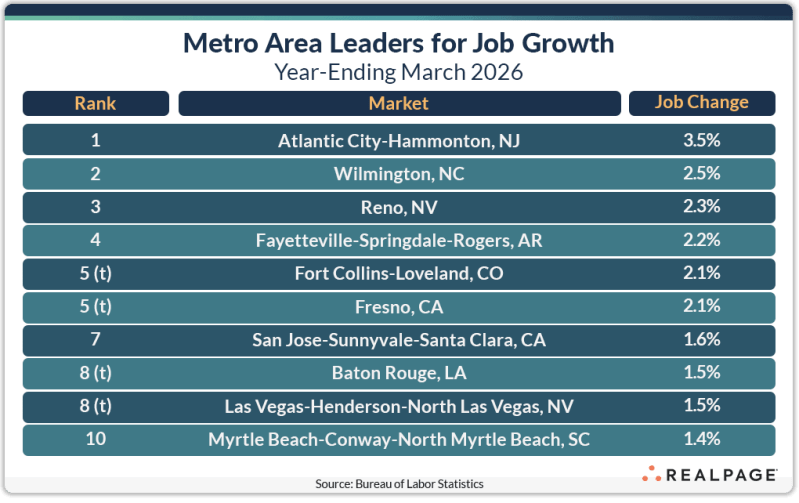
Other top 20 large markets in the 1% to 1.1% growth range included San Diego, Dallas, Raleigh/Durham and Austin.
Source: RealPage

