
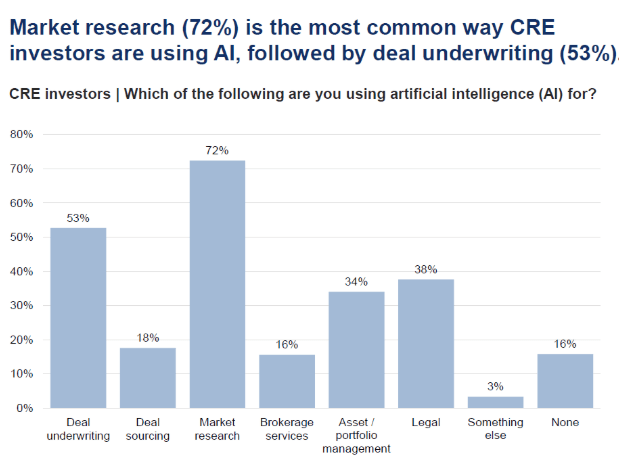
Source: John Burns
Source: John Burns
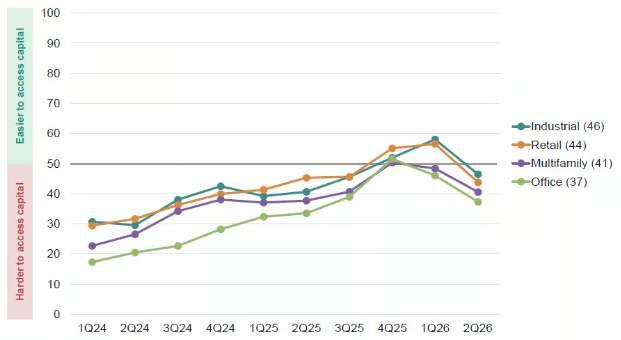
The latest JBREC index shows a more cautious investment environment in Q2 2026 as rising inflation concerns, higher borrowing costs, and policy uncertainty weigh on multifamily sentiment.
Index values below 45 indicate a contracting market, while readings above 55 suggest expansion. Values between 45 and 55 reflect a market balanced between buyers and sellers.
Build-to-rent investors largely hit pause during the quarter as uncertainty surrounding the 21st Century Road to Housing Act weighed on new investment decisions. Nearly two-thirds of investors paused future allocations, while 28% redirected capital elsewhere.
Source: John Burns
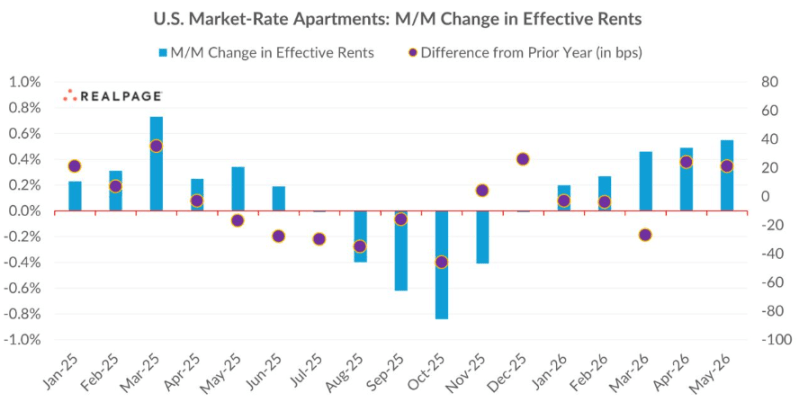
Multifamily rent gains/losses were worse than the previous year (purple dots) every month during the last five months of last year.
This year has been the opposite, as the gains each month (blue lines) have been much higher than the previous year.
Source: RealPage
Overall construction materials costs increased 2.6% month over month in May and are now up 9.6% over the past year. Construction input costs have gotten pricier every month this year, and they’re rising at the fastest annual rate since the pandemic. Contractors are being hit by a double whammy of rising materials prices and much lower increases in what they can charge for new projects.

Source: Multifamily Dive
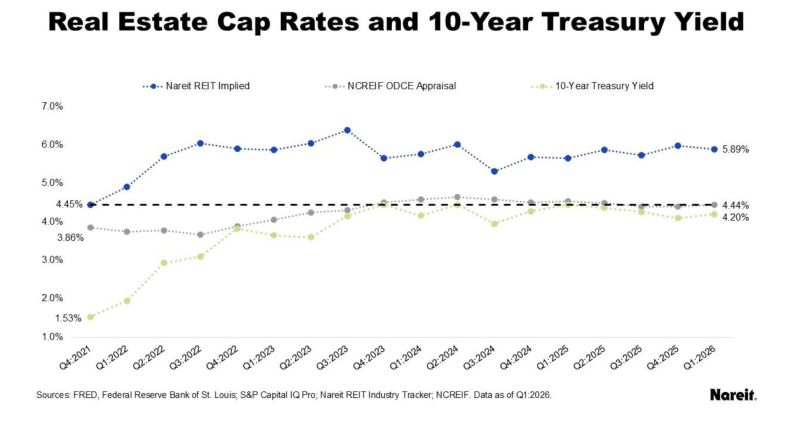
Cap rates for REITs continue to trade about 100 basis points higher than the 10-year treasury, but private companies continue to value their real estate below the 10-year treasury yield (with internal appraisal cap rates).
Either REITs are priced too cheap or the internal private real estate marks are too high.
Source: Nareit
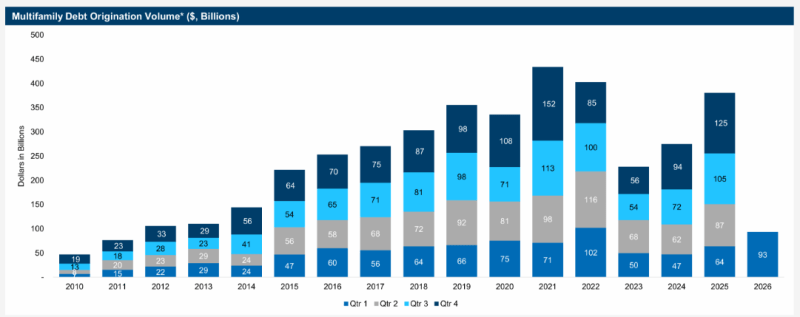
Apartment loan originations surged 46% year-over-year in the first quarter of 2026, making it the second largest Q1 in history, behind only Q1 2022.
Source: Newmark
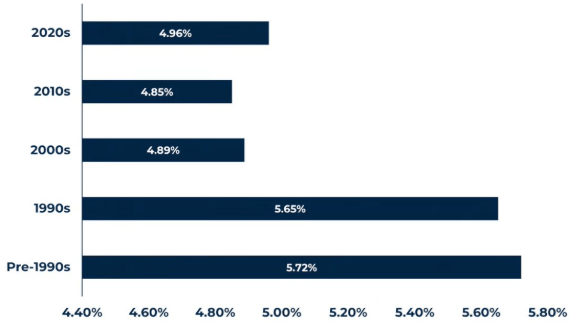
One of the multifamily sector’s most reliable pricing anchors has been flipped upside down: in many trades today, brand‑new Class A assets are selling at higher cap rates than older value‑add product.
With core and core‑plus funds largely sidelined the last few years, value‑add buyers have become the marginal price setters and they are underwriting newer deals with a very different set of return targets. These investors are paying up for older stock they can actively improve, while demanding a discount on new deliveries that offer less scope for forced appreciation.
The capital most eager to transact today is not looking for long‑duration, bond‑like income streams; it is looking for upside. The result is an upside‑down yield curve by vintage that would have been hard to imagine a few years ago.
Source: Globe St.
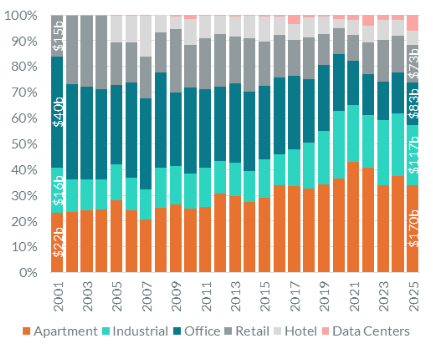
Source: RealPage
This week PODS unveiled their sixth annual Moving Trends Report, highlighting the U.S. cities with the most move-ins and move-outs. The Carolinas dominated the top 6.
Top 10 cities with the highest number of move-ins:
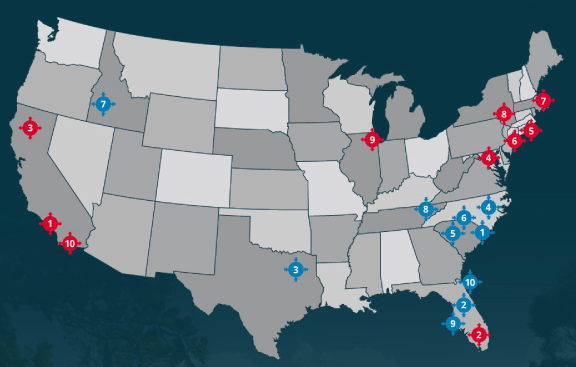
Once again, Wilmington, NC, proves to be one of the most popular places to move to in the country.

Affordability overtook career as the number one deciding factor for moving Americans, with 58 percent of respondents claiming it as a top motivator. Up next at 41 percent was community and connection.
Top 10 cities with the highest number of move-outs:
Source: PODS
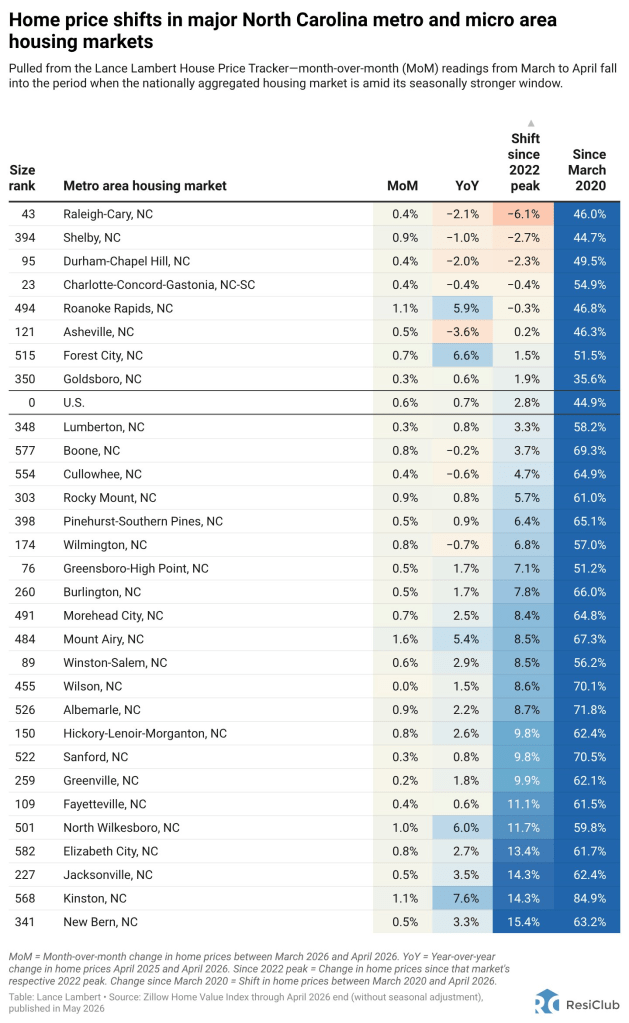
Source: Lance Lambert

