
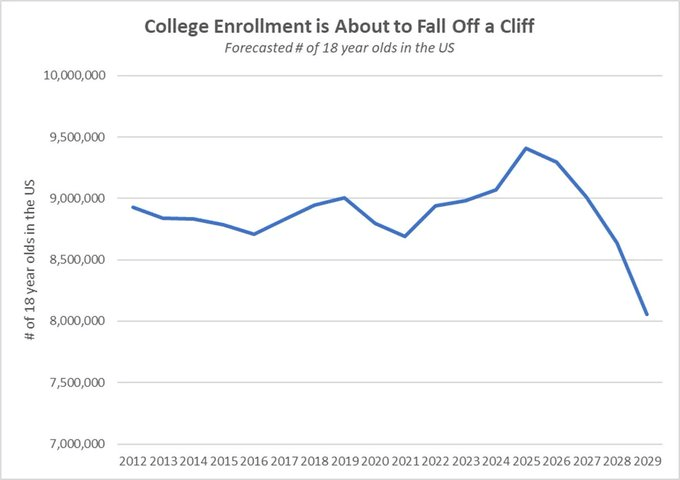
Why?
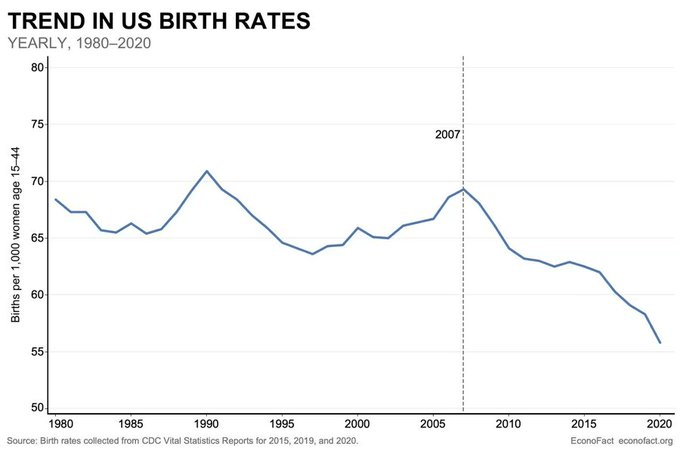
Why?
Wages had been outpacing inflation since early 2023, but that changed since the start of the war as inflation is now once again rising faster than earnings.
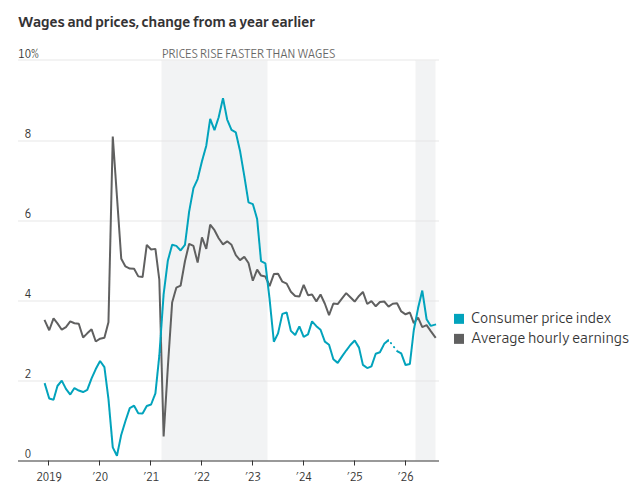
Source: Wall Street Journal
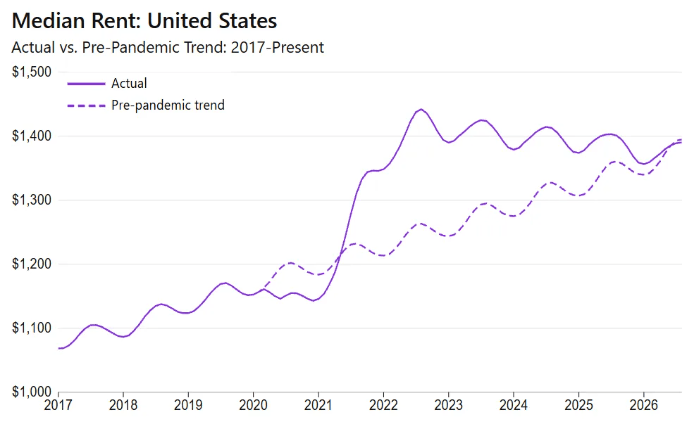
As of August 2026, the national median rent sits at $1,390, almost exactly where it would have been if rent growth since 2020 had remained on the slow and steady trajectory it had been on before the pandemic.
Since 2020, the rental market has whipplashed between skyrocketing rents and price declines, and those alternating hot and cold spells have now offset each other such that rent growth over the past six and half years as a whole averages out to an annual pace of 2.5 percent per year.
Source: ApartmentList
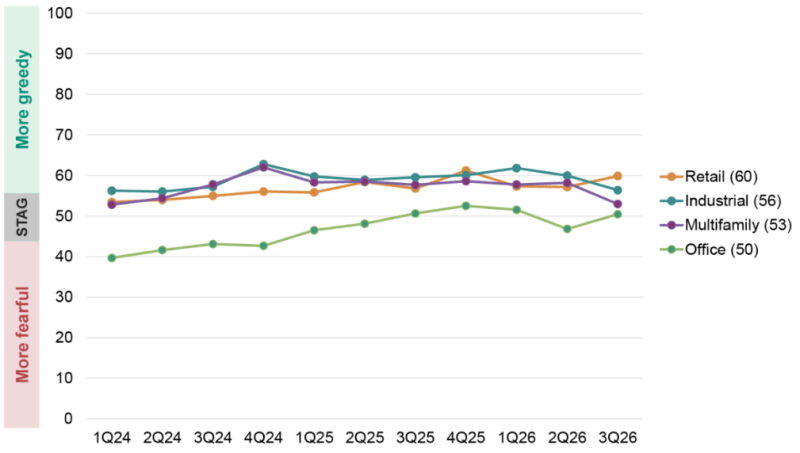
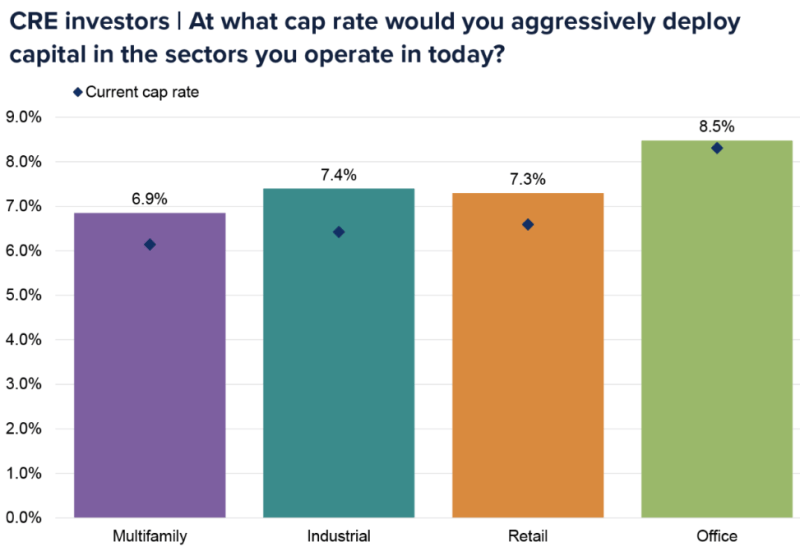
John Burns and CRE Daily’s Fear & Greed index through Q3 2026:
Source: John Burns
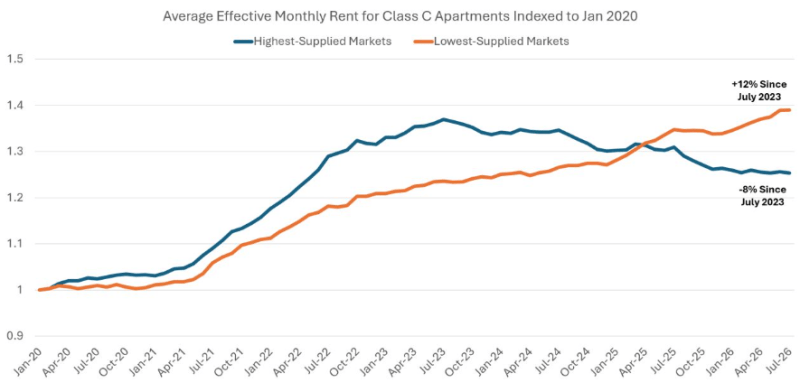
Source: Jay Parsons
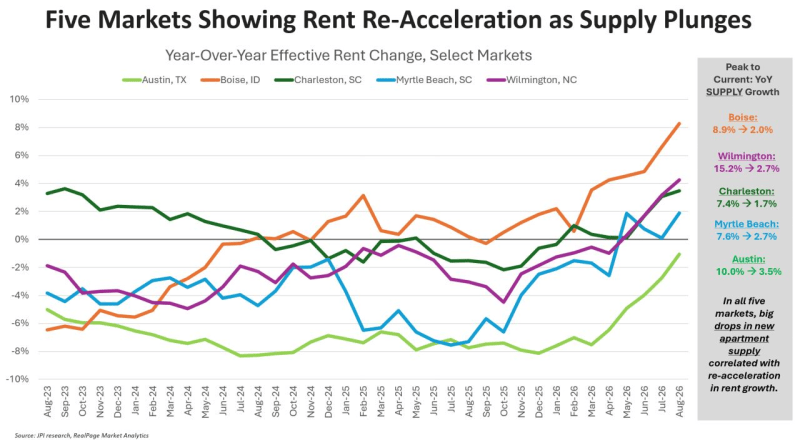
Wilmington, NC: A boomtown that gained attention in the COVID era, and then dismissed as “oversupplied” when year-over-year supply growth soared to 15.2%. Well, it’s now just 2.7%, and rents are starting to pop again, up 4.3% year-over-year.
Charleston, SC: Right behind Wilmington with rents now up 3.5%, as Charleston seems to be upgrading its status from tertiary to secondary in this cycle. Supply growth peaked at 7.4%, but is now just 1.7%.
Myrtle Beach, SC: This is the biggest trough-to-current rent rebound among Sun Belt markets thus far. At one point, rents here fell nearly 8% year-over-year. Now, effective rents are up 1.9%. Like elsewhere, the rent rebound is timed with supply dropping off with year-over-year supply growth cooling from 7.6% to 2.7%
Source: Jay Parsons
Per Wells Fargo, transaction demand has ground higher in spite of rising rates as sellers soften their asking cap rates, buyers swallow tighter cap rate spreads and lenders open up the spigots.
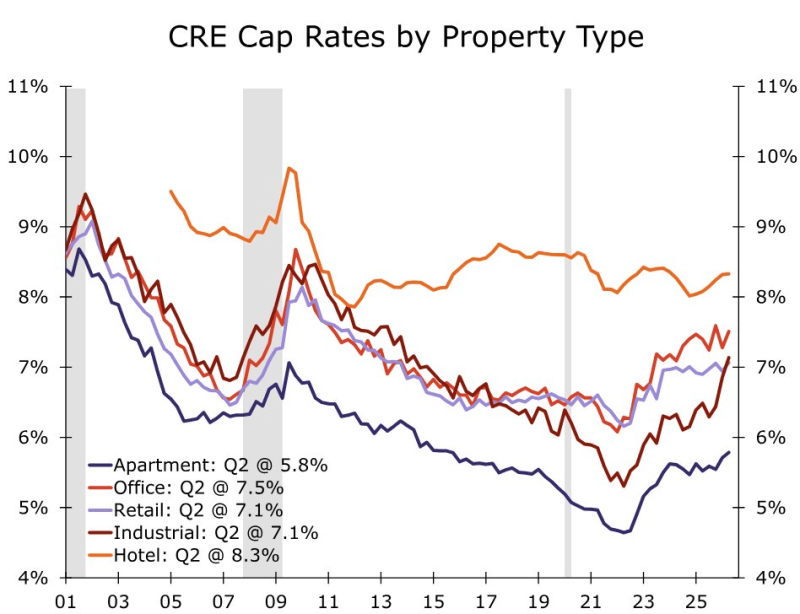
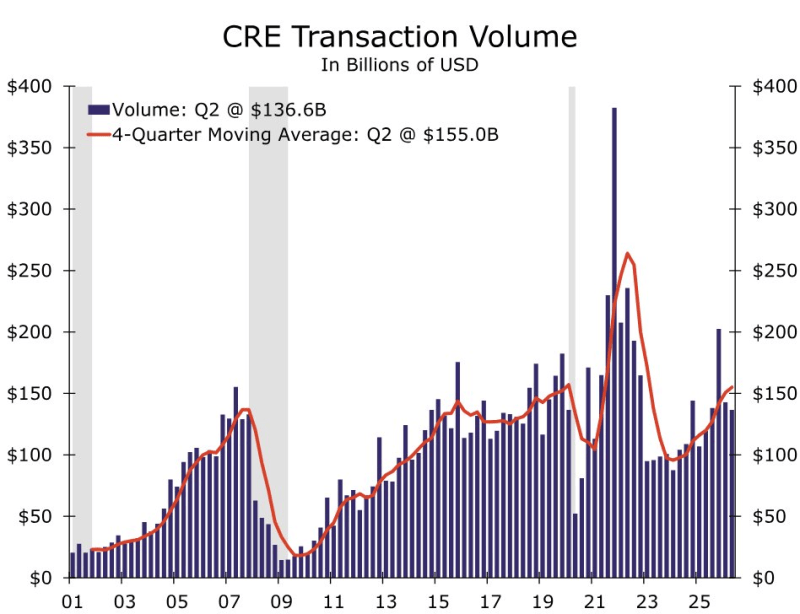
Source: Gavin Campbell
U.S. apartment loan originations are up 26% year-over-year and on track to make 2026 the second-biggest year ever. Not because of increased sales activity. But because of a burst of refinance/recap activity from apartment owners with maturing loans, trying to wait out better days (and better values) to sell.
The surge in refinancing has helped stabilize values, but compressed sales volumes as many would-be sellers refinance instead. This isn’t to say refinancing is cheap or easy or painless. But debt capital is widely available, and it’s as much of a lifeline to current owners as it is a hindrance to would-be buying hunting for quality assets at distressed prices.
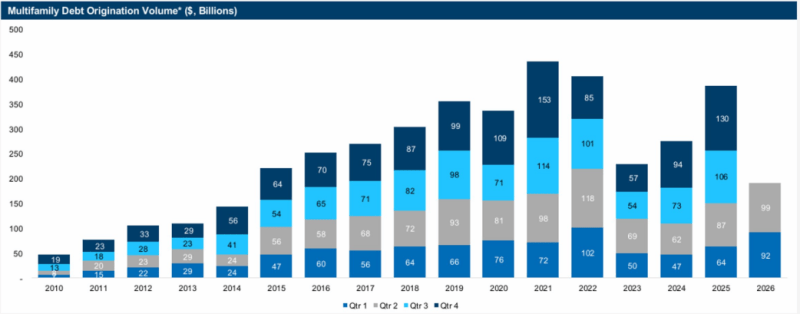
Source: Jay Parsons and Newmark
Birth rates are down 35% in the last three decades. At the same time, deaths are inching up. By 2034, the U.S. is projected to have more deaths than births. This is happening due to the a) aging of the U.S. population and b) lower fertility rates.
Fewer young Americans aging into their prime years working and home-buying years. At the same time millions of older owners are aging out.
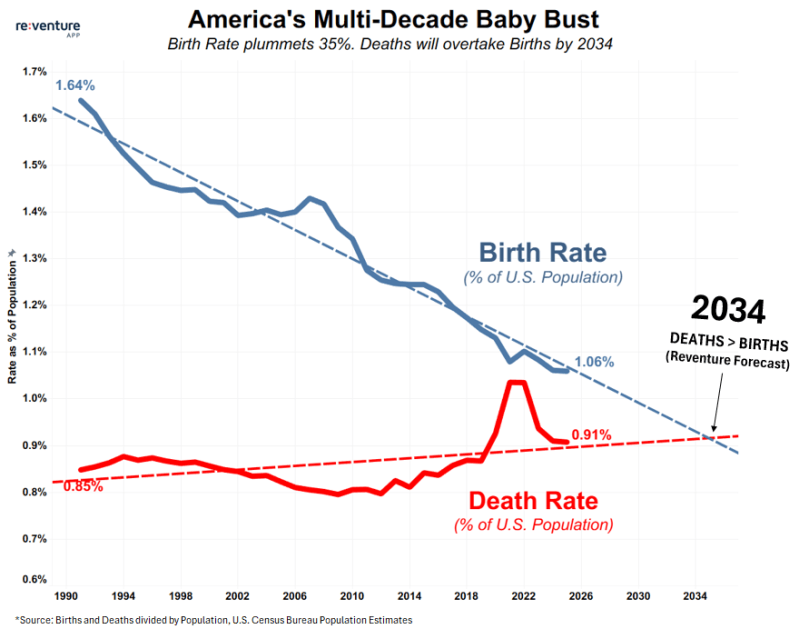
Source: Nick Gerli

