Zumper’s State Of Renting Report

Highlights from Zumper’s Annual State Of Renting Survey & Report:

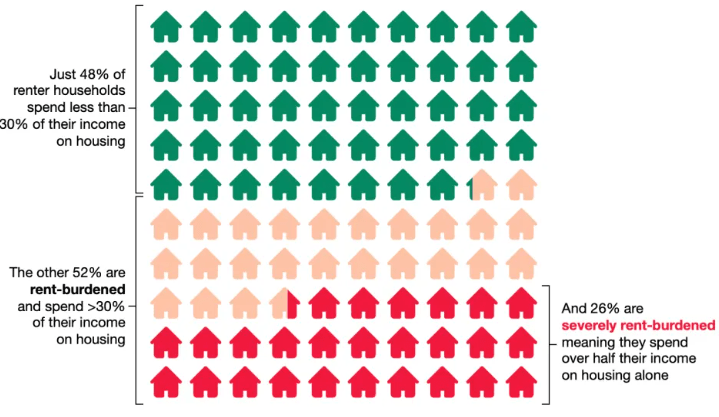
  • About 60% renters now spend 40% of their income on rent. Renters paying more than 28% of their income on rent has long been the benchmark for what owners, renters and lenders consider unaffordable.
  • About 1 in 5 renters cite lowering the cost of living as one of the main drivers of a move this year, up from about 1 in 8 in 2021.
  • Due to rising costs, only 66% of renters see buying a home as part of their long-term plans, down from 73% in 2021 (they consider themselves “forever renters”)
  • The top five destinations renters relocated to in 2025 were: Los Angeles, Atlanta, New York City, San Francisco, and Charlotte showing that renters are moving to job-dense cities.
  • Only 12% of renters now work exclusively from home, half the rate seen during 2021-2023.
  • 63% of respondents report a commute time of 30 minutes or less, and commute was the third most cited reason for deciding where to live.
  • 82% of renters say they are unsure or not confident in the economy, and 66% believe the U.S. is currently in a recession. 
  • AI usage during the rental search has more than doubled, with nearly 10% of renters saying they used tools like ChatGPT, rising as high as 15% in major coastal cities.
  • The share of renters living with non-family, non-partner roommates continued its steady decline, dropping to 19% in 2025 from about 22% in 2022. This trend mirrors a broader cultural shift: singlehood in the U.S. has been rising for decades, reshaping household formation and what adulthood looks like for many Americans.
  • About 50% of renters are pet owners
  • Access to outdoor space has become increasingly important, with nearly 20% of renters naming it a top-three priority when choosing where to live, up from 16.5% in 2023.

Source: Zumper

Multifamily Demand Fell In Q4 Bringing Larger Than Expected Rent Declines

Apartment demand fell by 40,400 units in Q4 2025, bringing annual demand down to only 365,900 units. New supply also continued to decline, (89,400 in Q4 and 409,500 year-over-year), but it was not as rapid as the decline in demand.

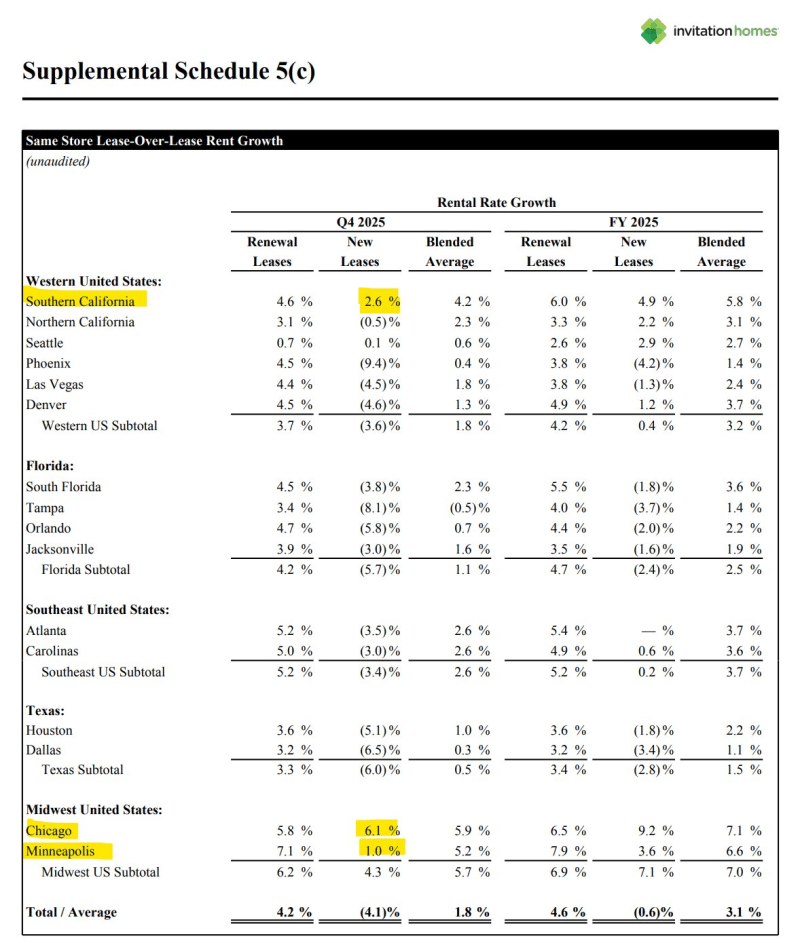
Rent prices fell 1.7% in Q4. While it’s common for operators to cut rents in the slower leasing season, this latest decline was roughly twice as deep as the cuts the market has seen in 4th quarters during the past five years.

Over 23% of apartments were offering concessions as of Q4, and the average concession was 7%. As operators focus on filling units in the coming months, concession utilization could become even more prevalent, making true rent growth harder to realize until discounts burn off.

Source: RealPage

Allied Van Lines’ 2026 Migration Report

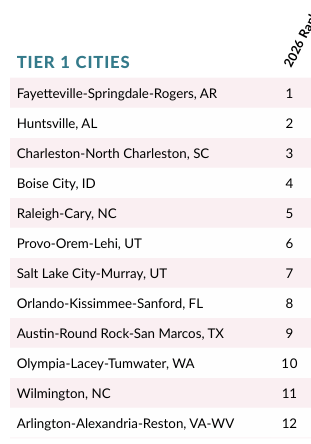
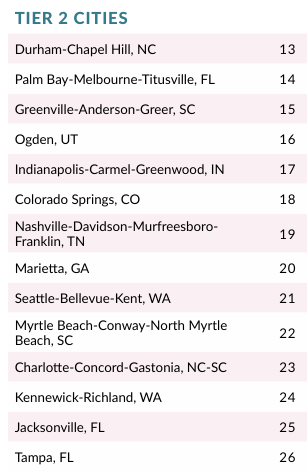
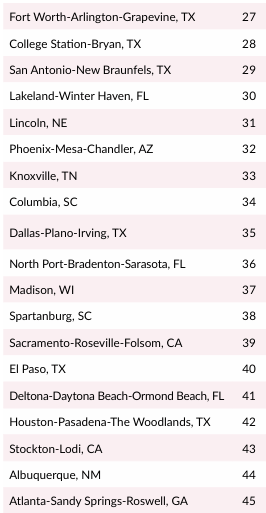
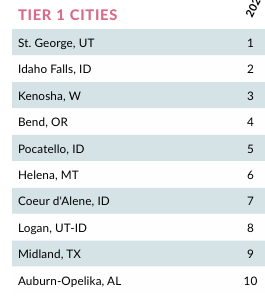
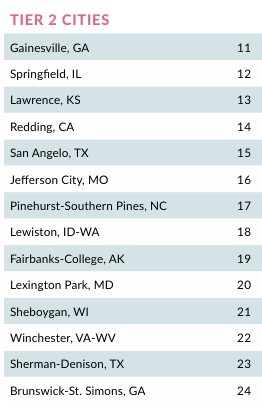
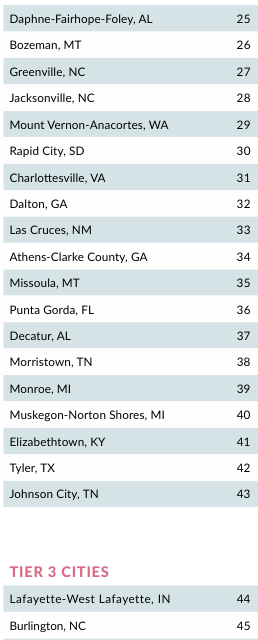
Each year, Allied Van Lines’ U.S. Migration Report analyzes where people are moving to in the United States. Migration trends show steady movement toward midsize cities, particularly in the lower-cost-of-living Southeastern states.

In spite of the unprecedented shifts to the U.S. migration map over the last few years, one thing remains the same: Americans prefer to move later in the week and during the summer to minimize the disruption to their daily lives. 

Source: Allied Van Lines

2026 U-Haul Growth Index

U-Haul ranks states by their net gain (or loss) of customers who rented a one-way truck or moving containers in one state and dropped off their equipment in another state. It’s compiled from over 2.5 million annual one-way transactions across the U.S. and Canada.

Sunshine and warm weather remain appealing to the moving public, based on the top 10 growth states. Conversely, eight of the bottom 10 states are northern states. 

Blue-to-red state migration, a hotly debated political topic that became more pronounced after the pandemic of 2020, continues to be a discernable trend. Seven of the top 10 growth states currently feature Republican governors, and nine of those states went red in the last presidential election. Conversely, nine of the bottom 10 growth states feature Democrat governors, and seven of those states went blue in the last presidential election.

The number in (parentheses) shows where the state ranked last year:

Source: U-Haul

Condo Prices Dropping Faster Than Single Family Homes

Condo owners are struggling with the worst market in more than 10 years. Prices for U.S. condominiums posted their biggest annual decline since 2012.

The condo market’s softness reflects ways the housing market and buyer preferences are evolving. Many condo buildings are located in urban downtowns, which are less attractive than they used to be for people who now work from home at least part-time. Condos are popular in second-home markets, which have suffered from a slowdown in demand.

Rising homeowner-association fees due to higher insurance premiums and maintenance costs are also making condominium purchases less affordable. Another challenge for condo owners is that it can be difficult for buyers to get mortgages for units in buildings that need major repairs or don’t have enough property insurance.

Source: Wall Street Journal

United Van Lines’ 2026 National Movers Study

The top inbound states of 2025 were:   

  1. Oregon  
  2. West Virginia  
  3. South Carolina  
  4. Delaware  
  5. Minnesota  
  6. Idaho  
  7. North Carolina   
  8. Arkansas   
  9. Alabama  
  10. Nevada  

The top outbound states for 2025 were: 

  1. New Jersey 
  2. New York  
  3. California 
  4. North Dakota 
  5. Colorado 
  6. Mississippi 
  7. Massachusetts 

Couple Key Notes:

Major southern migration magnets like Texas and Florida — historically powerhouse inbound destinations — are now experiencing balanced migration patterns, reflecting how rising housing costs are beginning to constrain even traditionally attractive regions.

A broad migration shift toward smaller cities and towns is redefining American relocation patterns.

Source: United Van Lines

John Burns On The Rental Market Entering 2026

Master Planned & Build-To-Rent Communities:

  • There’s been a dramatic shift in Master-Planned communities since 2018. Master-planned developers initially resisted rental components, but now nearly all are incorporating them. They’ve discovered that renters often become homebuyers within their communities, providing earlier land sales and better cash flows.
  • Build-to-Rent is in the early innings and remains a huge long-term opportunity. With 11-14 million people renting homes compared to 24-30 million apartment renters, the industry should be building around 150,000 rental homes annually (currently falling short). BTR will remain cyclical in the short term (based on the economy), but he views it as a decades-long investment opportunity when you zoom out and look at the bigger picture.

Key Demographic Shifts Shaping Future Demand:

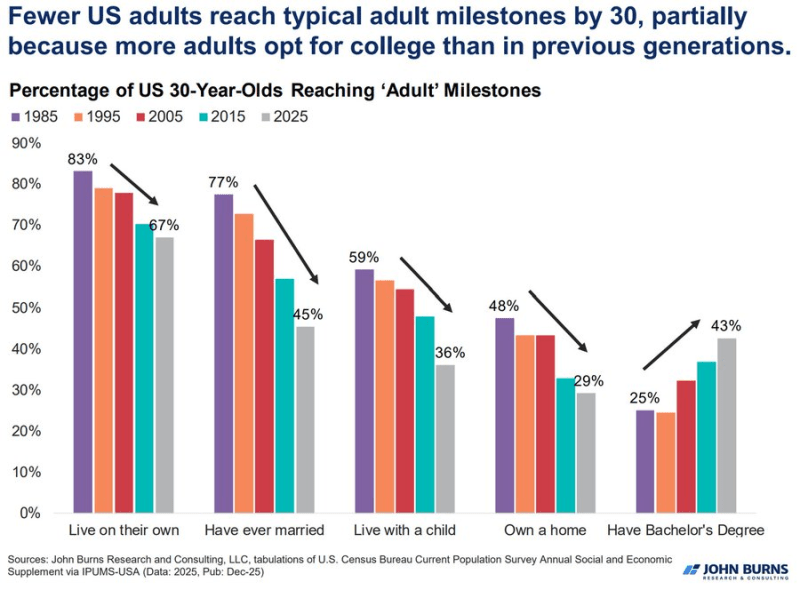
  • Essentially zero growth in the 25-34 age group over the next decade. Builders need to rethink standard apartment development projects where they assume college graduates will be there to lease them up.
  • Major growth in 45-54 and 75+ populations. While assisted living will benefit, other segments will as well. There are many lifelong renters in the 45-54 age group that appreciate certain types of amenities and apartment styles. A.I. will improve lifespans and health, even for those in the 75+ bracket.
  • More young people living alone (boosting one-bedroom demand). People used to always live with other people and never live with their parents. More people are living with their parents, but when they move out more are living alone.
  • Fewer divorces and children, changing household formation patterns. People have less need to move up in size to a home if they do not have children.

New Supply and Immigration:

  • While new supply has the effect of lowering rents for all properties (class B renters move up to discounted class A units and class C renters move up to discounted class B units), the opposite effect happens with immigrants. They fill class C properties which pushes tenants up to class B, which pushes tenants up to class A, moving rents upward across all properties.

Renting vs. Buying Affordability:

  • The gap between the all-in cost of owning a home (mortgage, taxes, insurance, etc) and renting a similar style home at $1,400 per month. The historical gap is closer to $300 per month.
  • Burns thinks the Fed’s inflation target is 2.00% and the Fed Funds rate target is 3.50% (150 basis points above the inflation rate). Historically the 10-year treasury is 100 to 140 basis points above the Fed Funds rate, which would be 4.50%. Mortgage rates are typically 150 to 200 basis points above the 10-year treasury which would mean they’re in the low 6% range (which is right about where they are right now).
  • That will create a tailwind for the apartment market for many, many, many years because it will remain much more affordable to rent than own for an extended period.
  • That means there is going to be continued pressure on home buying affordability, which will continue to be very positive for apartments and build-to-rent communities.

Source: The Rent Roll Podcast

Job Growth Is No Longer The Most Reliable Indicator For Rent Growth

The balance between job growth and rent growth—once a reliable indicator for multifamily investors—has become harder to read. Despite a cooling labor market and record apartment construction, the usual patterns linking employment gains to rising rents no longer hold as tightly.

While job growth has historically had a meaningful, positive impact on multifamily rents, the past few years have upended that relationship.

The labor market weakened this year, with total job growth in the third quarter reaching 187,000—a 53.1% year-over-year decline—and unemployment inching up from 4.0% in January to 4.4% in September. That kind of slowdown would typically damp apartment demand and pull down rents. 

Analysis has found that, in 93 of 99 quarters studied, metros with higher multifamily delivery rates experienced weaker rent growth, even after accounting for job growth. Conversely, 94 of the same quarters showed stronger rent gains in areas with faster job growth, once new supply was controlled for. 

Yet those correlations have shown signs of breaking down. The pandemic, remote work, and the uneven return to offices may have tightened or disrupted labor-housing linkages that once seemed dependable. Demographic shifts—such as an aging population—and heightened supply volatility could also be adding complexity.

Taken together, the data suggest that while job growth continues to shape rent trends, its influence is now mediated by new market dynamics. The multifamily sector’s long-trusted economic compass is no longer pointing straight.

Source: Globe Street