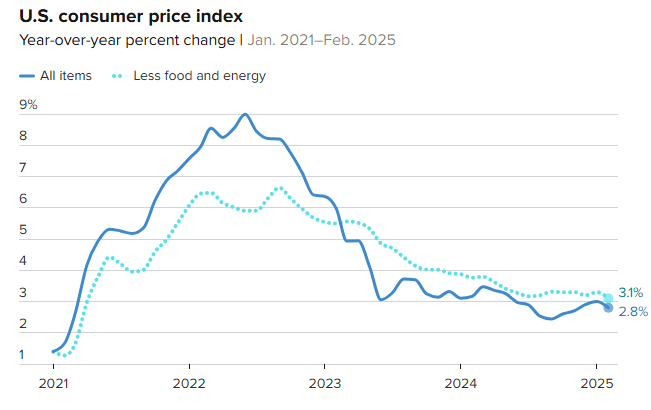
Rose 0.2% on the month and 2.8% year-over-year, which were below expectations
Core CPI (excludes food and energy) also rose 0.2% on the month and 3.1% annually, which were also below expectations
What It Means: A lower-than-expected inflation print provides the Fed more room to cut rates in the months ahead if the employment market shows weakness
CPI rent inflation (a notably lagged measure of rents) continues its rapid cooling and is now within just 36 basis points of pre-COVID norms.
If you exclude rent/shelter inflation, headline CPI is already at 2.0% (the Fed’s target)
________________________________________
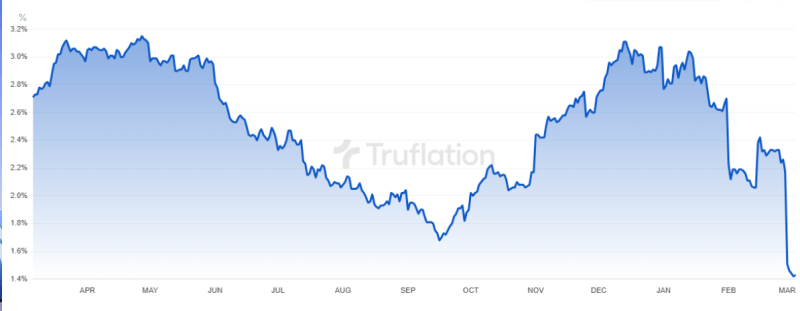
The government’s CPI data is for the month of February. The Truflation index is a private data company that measures inflation based on real-time inputs. It has shown a sharp decline starting at the end of February and is now down to only 1.32%:
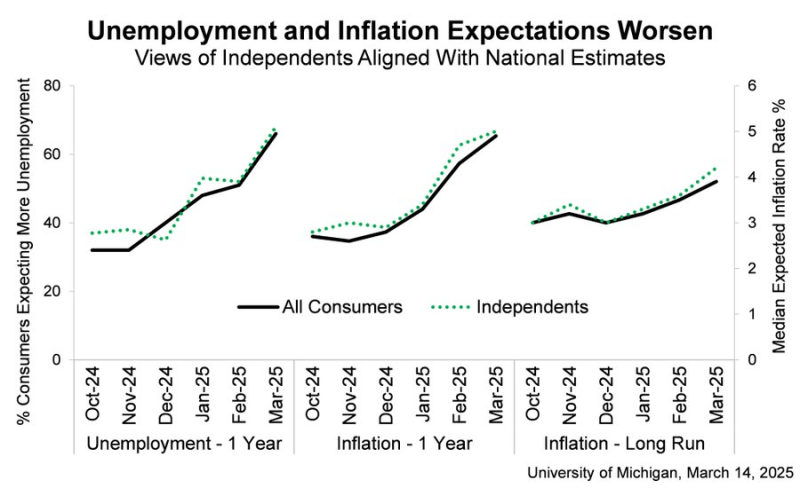
Year-ahead inflation expectations jumped to 4.9% from 4.3%.
Three consecutive months of unusually large increases of 0.5 percentage points or more.
This month’s rise was seen across all three political affiliations.
Long-run inflation expectations surged to 3.9% in March from 3.5%.
This was the largest month-over-month increase seen since 1993, stemming from a sizable rise among Independents, and followed an already-large increase in February.
More than 59,400 units are under construction across North and South Carolina with an expected 45,700 of those units coming online in 2025. Virtually all of those units underway across the Carolinas are concentrated in six of the region’s 10 markets:
Charlotte, NC: The largest market in the Carolinas had 25,064 units underway at the end of 2024. No stranger to new apartment supply, Charlotte has grown total inventory nearly 29% over the last five years, well above the national pace of roughly 11%. The 18,863 units expected to deliver to Charlotte in 2025 would set a 29-year high. With those new units, Charlotte’s existing unit base would expand another 7.8%
Raleigh/Durham, NC: 13,799 units under construction in 4th quarter 2024, with 10,353 of those units expected to complete in 2025. Those new units would increase the unit base 5.0% this year. That growth rate comes on the heels of a prolonged supply wave as this market has grown total inventory 25% in the last five years.
Asheville, NC: Punching above its weight in terms of new supply, developers are expected to add 3,509 units this year in Asheville, a small market in western North Carolina’s Blue Ridge Mountains. That would grow the existing unit count (26,745 units) a massive13.1%, notably above the U.S. norm. Over the past five years, the inventory base in Asheville has expanded 19.7%.
Charleston, SC: Jumping to the Atlantic coast of South Carolina, supply is expected to climb with 3,867 units under construction. The majority of those units (3,213 units) are projected to complete in 2025, expanding total inventory 4.2% this year. This market has experienced a much smaller supply wave then neighboring markets as total inventory here has only grown 4.9% in the last five years.
Greensboro, NC: Apartment inventory has expanded roughly 7% over the past five years. At the end of 2024, there were 3,458 units under construction with 2,664 of those units scheduled to complete in 2025. That would expand total inventory another 2.3% this year.
Wilmington, NC: 3,212 units were underway at the end of 2024. This year, 2,438 of those units are expected to complete, growing total inventory 8.0%. In the last five years, this market has grown total inventory a staggering 36%
Four other markets round out the 10 largest apartment markets in North and South Carolina.
Myrtle Beach, SC: 2,168 units of new supply in 2025, growing inventory 4.0%. Existing unit count has expanded 31.2% over the last five years.
Greenville/Spartanburg, SC: During the past five years, inventory ballooned 20.8%. Another 1,200 units are expected to deliver in 2025, increasing inventory 1.5%.
Fayetteville, NC and Columbia, SC: Two smaller markets, both are expected to add roughly 700 units in 2025.
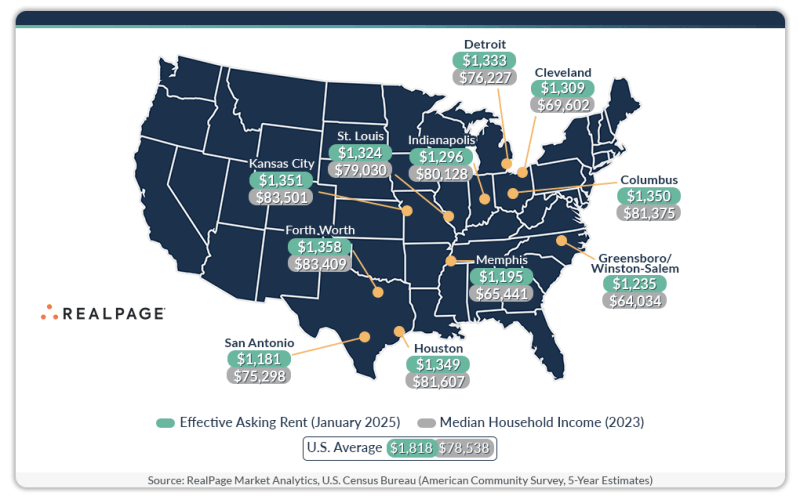
Of the nation’s 50 largest markets, only 11 had average effective asking rents below $1,400.
The Greensboro/Winston-Salem market in North Carolina, with rents at only $1,235, came in just behind San Antonio and Memphis for the lowest rents in the county.
The U6 underemployment rate rose sharply, by 0.5%, to 8.0%, its highest level since October 2021. Compared to the regular unemployment rate (called ‘U3″), the U6 rate includes:
(1) people who want to work but haven’t looked for a job in the past 4 weeks
(2) people who are working part-time but would prefer full-time work.
Those who are not in the labor force but want a job now rose a sharp 414,000 to 5.9 million, the highest number in over three years.
151,000 new jobs were created (below expectations of 170,000), and this report only showed a decline of 11,000 federal workers. This likely means the majority of federal worker firings will come in the months ahead.
What It Means: A weaker employment market makes the Fed more likely to cut interest rates.
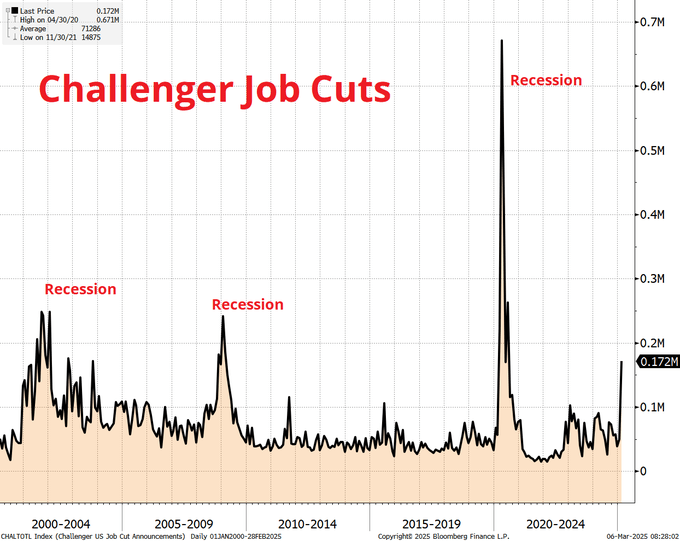
What It Is: Monthly report that tells us how many job cuts companies in the U.S. have planned.
U.S. employers announced 172,017 layoffs for February, up 245% from January and the highest monthly count since July 2020 during the Covid panic. It marked the highest total for the month of February since 2009 during the global financial crisis.
More than one-third of the total came from Elon Musk’s efforts to reduce the federal headcount. Challenger put the total of announced federal job cuts at 62,242.
January’s planned reductions brought the total through the first two months of the year to 221,812, also the highest for the period since 2009 and up 33% from the same time in 2024.
What It Means: Weak employment data will make the Fed more likely to cut interest rates in the coming months
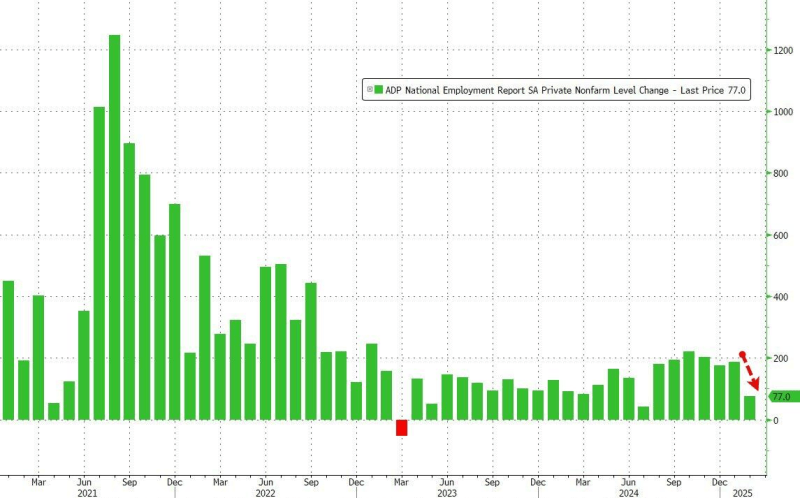
What It Is: Monthly report that gives an estimate of how many new jobs were added (or lost) in the private sector in the U.S. It’s put together by a company called ADP, which processes payroll for millions of workers.
Private employers only added 77,000 jobs in February on expectations of 148,000
From ADP’s Chief Economist: “Policy uncertainty and a slowdown in consumer spending might have led to layoffs or a slowdown in hiring last month. Our data, combined with other recent indicators, suggests a hiring hesitancy among employers as they assess the economic climate ahead.”
What It Means: A weaker payroll report makes the Fed more likely to cut interest rates in the coming months
_____________________________________
Truflation: What Is It? Truflation is a platform that tracks inflation (the rise in prices of goods and services) in real-time. Traditional inflation data, like the ones published by government agencies, is usually updated monthly and can be a bit slow. Truflation, on the other hand, uses real-time data from different sources, like prices from websites and stores, to calculate inflation more quickly.
The Truflation rate dropped from 2.17% to 1.46% this week, the lowest inflation reading since January 11th, 2021, led by Transport & Utilities Services going from 2.60% for 1.79%, Core going from 2.11% to 1.4%, and Goods going from 1.07% to 0.76%.
What It Means: The Truflation real-time data helps predict the delayed government inflation data that the Fed uses to make decisions on interest rates.
____________________________________________
MacroEdge Job Cuts Tracker: What Is It? Developed to provide transparency into public job cut announcements and layoffs.
Job cuts surged in the month of February
What It Means: A weaker jobs market makes the Fed more likely to cut interest rates in the months ahead
151,000 jobs added. Private sector jobs increased 140,000 while government jobs increased by 11,000.
Average Hourly Earnings increased 0.3%, a year-over-year gain of +4.1%, the highest in three months. Importantly, this continues to be well above the 2.9% year-over-year inflation rate as of 3.0% last month.
What It Means: The jobs market continues to show strength with wages increasing above inflation. This makes the Fed less likely to cut interest rates in the months ahead.
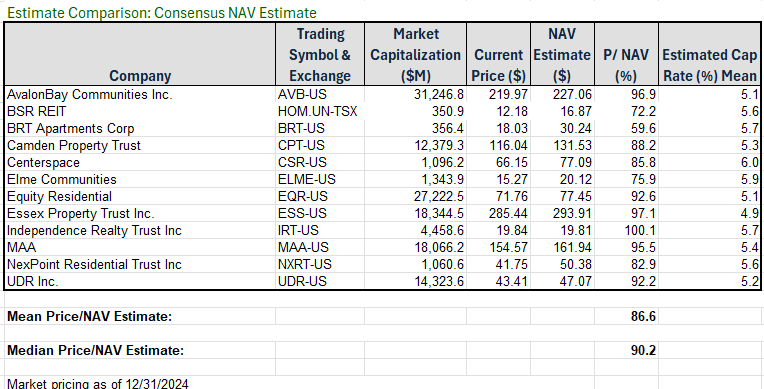
Multifamily REITs currently trade at discount of about 12% relative to their Net Asset Value. A discount to NAV means the stock prices is lower than the total value of the properties the company owns.
For example, if the total valuation of the company is $880 million, but the REIT (and the market) believes they can sell every property they own for $1 billion, then the stock trades at a 12% discount to its NAV.
The table below highlights specific multifamily REITs and their discount to NAV (the “P/NAV” column).
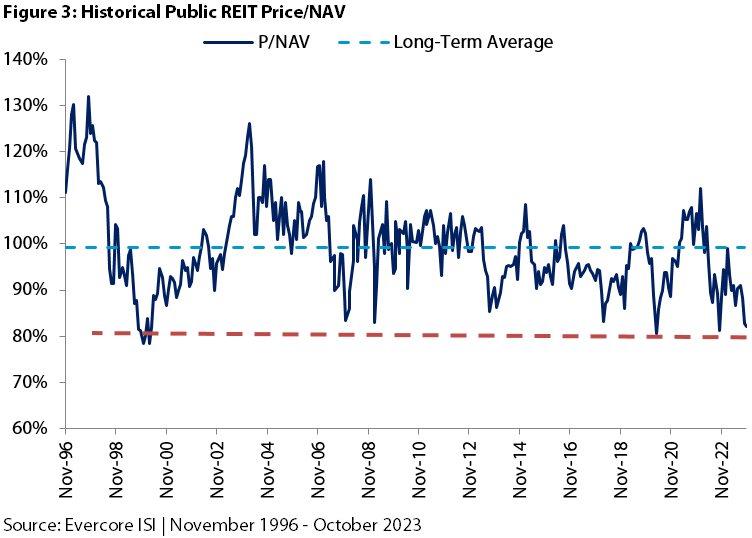
The graph below provides a historical view of all public REIT types going back to 1996, illustrating the fluctuations in price-to-NAV, where values above 100% represent a premium and values below 100% indicate a discount.
What It Is: Personal Consumption Expenditures: Measures how prices are changing in the economy.
The PCE price index (the Fed’s preferred inflation measure), increased by 0.3% month-over-month as expected, bringing the annual rate to 2.5%
Core PCE, which excludes food and energy, also rose 0.3% month-over-month, bringing the annual rate to 2.6%
PCE Supercore fell to just 0.22% month-over-month from 0.38% last month. Supercore focuses only on the least volatile items like rent, medical services and other goods that have more predictable prices changes.
What It Means: The report was good (but not great), and provides some room for the Fed to continue cutting if the employment market shows weakness in the coming months
____________________________________
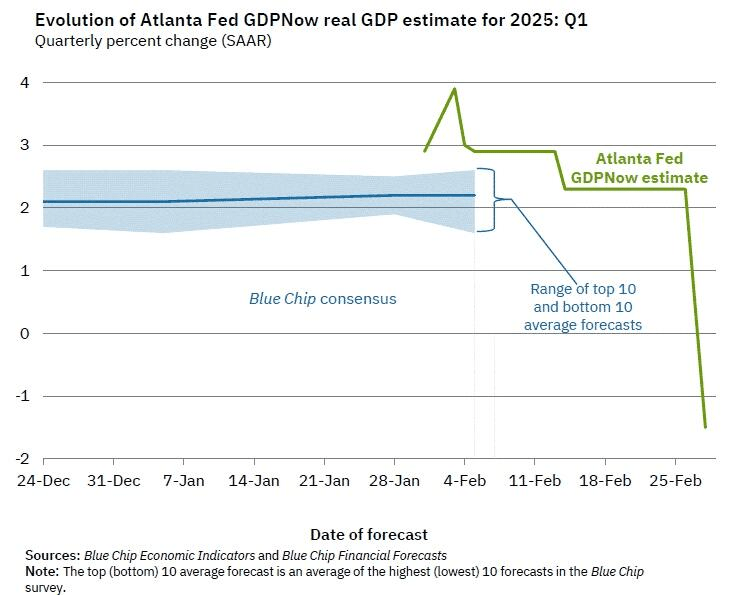
The Atlanta Fed’s GDPNOW model, forecasting US economic growth, just downgraded its estimate of Q1 2025 GDP growth from positive 2.3% to negative 1.5%. A slowing economy makes investors more likely to be defensive (buy treasuries) and makes the Fed more likely to cut interest rates.
_______________________________________
Bloomberg Economics estimates that if DOGE attempts to go for savings of $600B per year, GDP could fall by 2% by the end of this year, the unemployment rate could rise by nearly a percentage point, and CPI year-over-year could fall by nearly 0.9 percentage points.
The Fed has a dual mandate, low inflation and low unemployment, so this scenario would dramatically speed up their rate cutting cycle over the next 18 months.
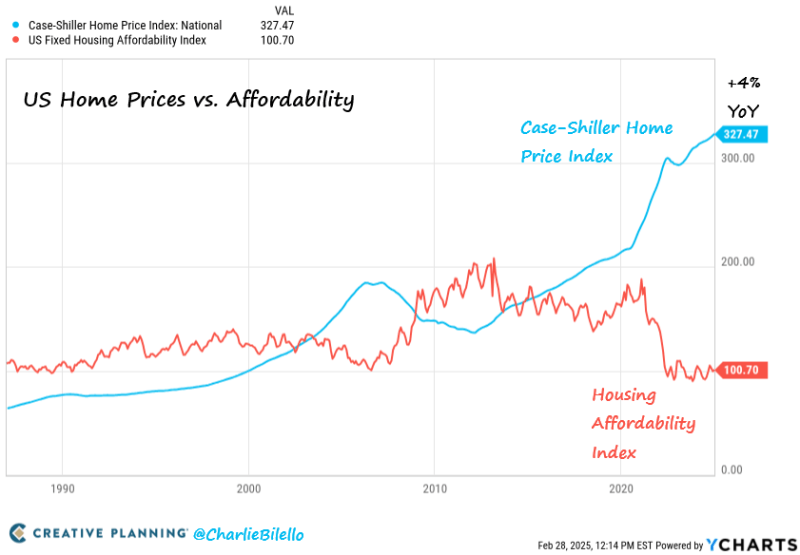
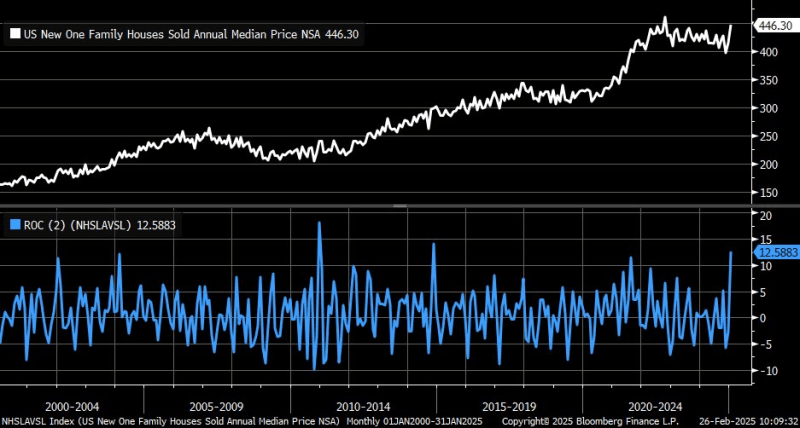
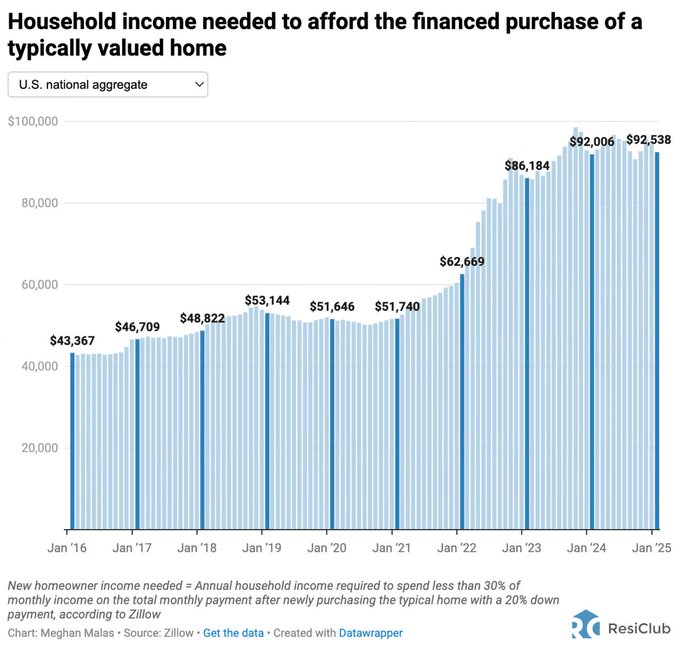
The median new single-family home prices spiked to $446,300 this month. The 2-month change is now up to +12.6%, which is the largest increase since November 2014. Rising home prices push affordability even further way for current renters.
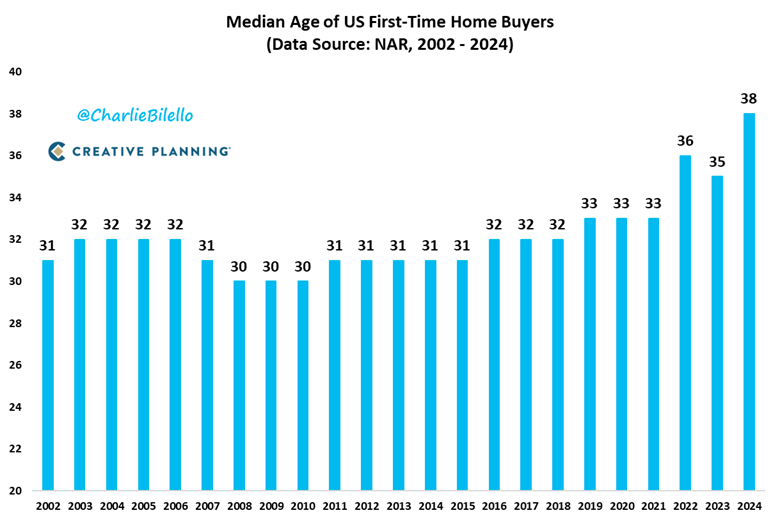
The median age of first-time home buyers continues to rise, creating more demand for rental units:
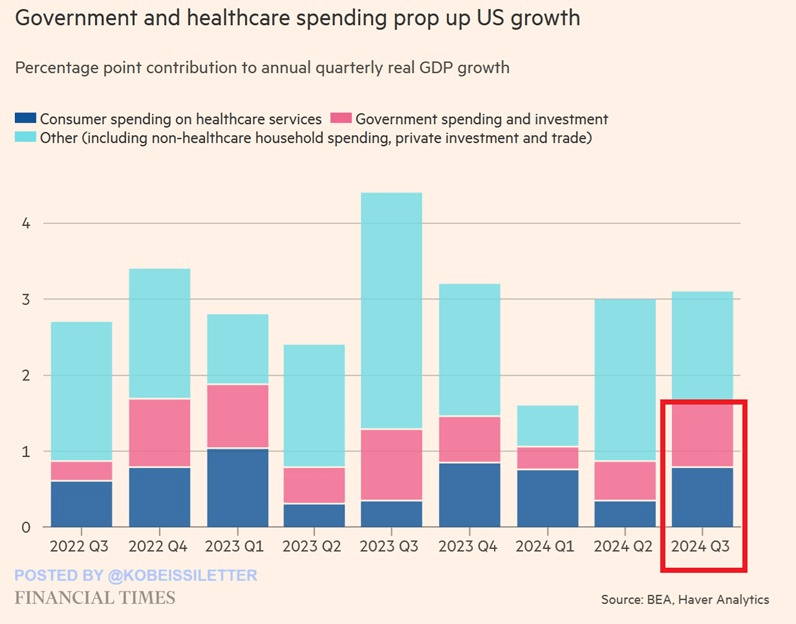
US consumer spending on healthcare and government expenditures accounted for over 50% of US GDP growth in Q3 2024.
Consumer spending on healthcare services alone accounted for 25% of GDP growth in Q3 2024. Government spending accounted for 28%, a combined total of ~53%.
The majority US economic growth now comes from healthcare and the government through taxes and debt.
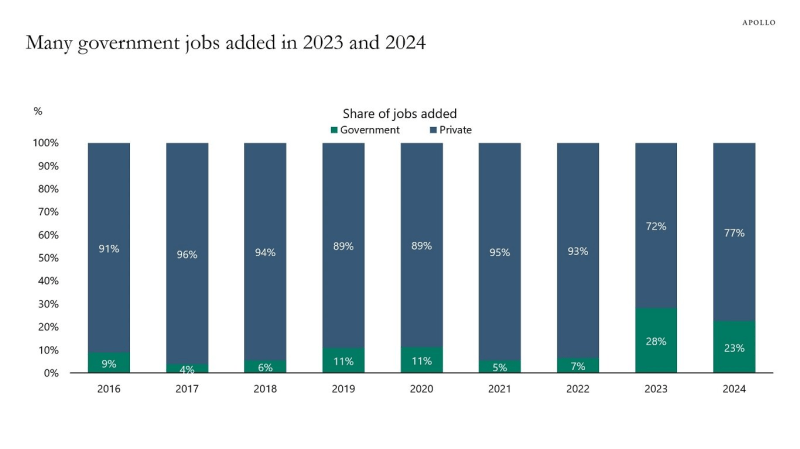
Since January 2023, the government has created more jobs than the tech, finance, construction, and manufacturing sectors COMBINED.
If DOGE continues cutting these jobs, the Fed will be far more likely to accelerate rate cuts in the coming months.
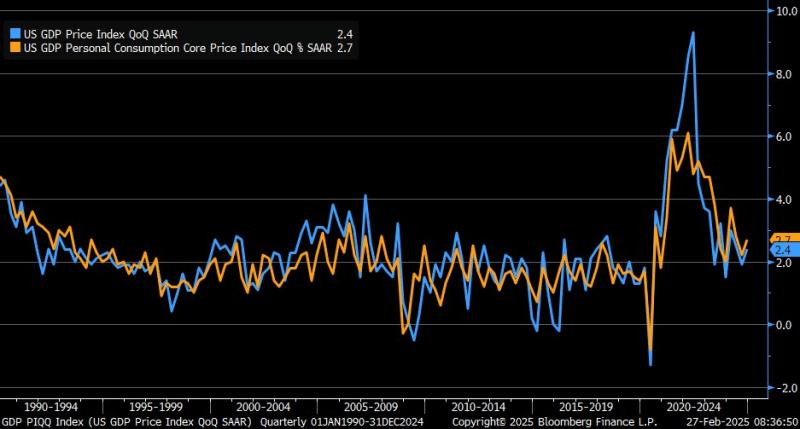
What It Is: Personal Consumption Expenditures: Measures how prices are changing in the economy. Core PCE excludes certain things that can make the numbers look more volatile, like food and energy. The PCE is the Fed’s preferred inflation metric.
Both the PCE (blue) and Core PCE (orange) components of GDP were revised higher for the fourth quarter of 2024, with PCE moving up from +2.2% to +2.4% and Core PCE moving up from +2.5% to +2.7%.
What It Means: Inflation numbers revised higher reduce the Fed’s ability to cut interest rates in the months ahead
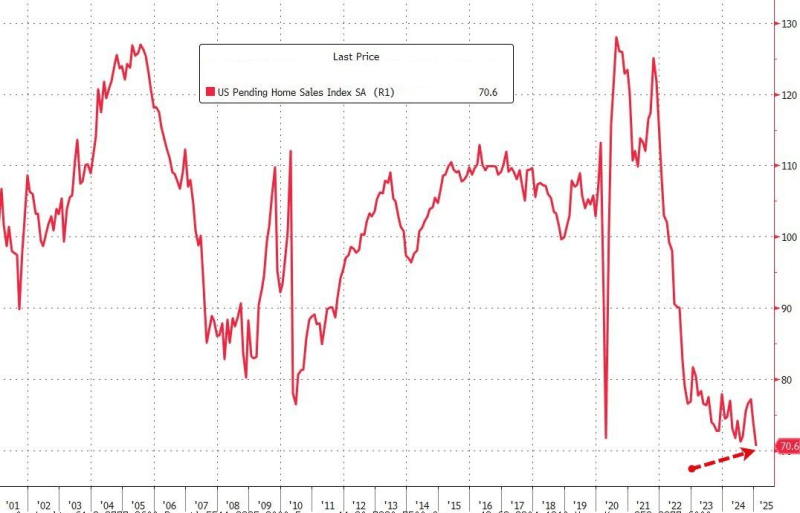
While existing home sales report showed a decline of 4.9% month-over-month, pending home sales fell 4.6% month-over-month and 5.2% year-over-year. The drop pushed the pending home sales index to its lowest level in history (taking out the 2008 financial crisis and Covid lows).