
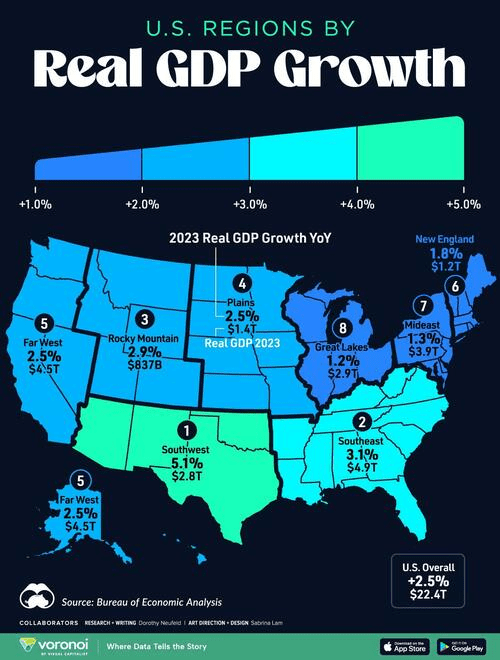
Real GDP Growth By Region
From the Wall Street Journal:
The data points to a shift away from living close to workplaces. The widespread adoption of hybrid work—allowing employees to do their jobs from home on certain days—is the key driver.
Research from Gusto, a payroll and benefits software company, shows that younger employees and high earners—defined as those who make over $250,000—are choosing to live farther away from their offices.
The average distance to work rose to 27 miles at the end of 2023 from 10 miles in 2019, according to Gusto’s study of 52,000 employees at more than 6,800 businesses. Among employees in their late 30s, that distance nearly tripled to 29 miles.

From the Wall Street Journal:
Higher interest rates, tighter lending conditions and flattening rents in parts of the country have left property companies from California to Florida waiting for financing that might not come soon.
The amount of time the average apartment project spends between construction authorization and when construction begins has risen to nearly 500 days, a 45% increase from 2019, according to property data firm Yardi Matrix.

Developers also are launching fewer projects amid the financing crunch. Multifamily building starts fell to an annual rate of 322,000 units in April, the lowest April rate since 2020, according to the Census Bureau.
While most developers get tripped up before real activity begins, a few have found trouble after starting construction, leaving them with half-built properties.
About half a million new apartments opened in 2023, the most in 40 years. Based on what is already under construction, analysts expect a similar number to be completed in 2024.
From the Wall Street Journal: Commercial Property Meltdown Clobbers Pension Funds
Pensions, like sovereign-wealth funds, university endowments and family offices, generally either buy properties outright or invest through private fund managers. Some analysts and pension advisers suspect those managers are themselves slow to report losses. Share prices of publicly traded real-estate investment trusts have generally fallen much further than private marks.
But pension funds to date have reported even less strain than private managers. Privately managed funds tracked by the National Council of Real Estate Investment Fiduciaries reported a negative 12% return in 2023, double the loss pension funds booked. The tracked funds hold a mix of apartment, industrial, retail and office properties. Pension officials often factor in private fund marks on a one-quarter lag because they take longer to arrive than stock and bond valuations.
The board overseeing Canada’s $461 billion national pension plan is shifting the focus of new real-estate investment away from bricks-and-mortar buildings and toward infrastructure such as highways and energy, according to its annual report published in May.
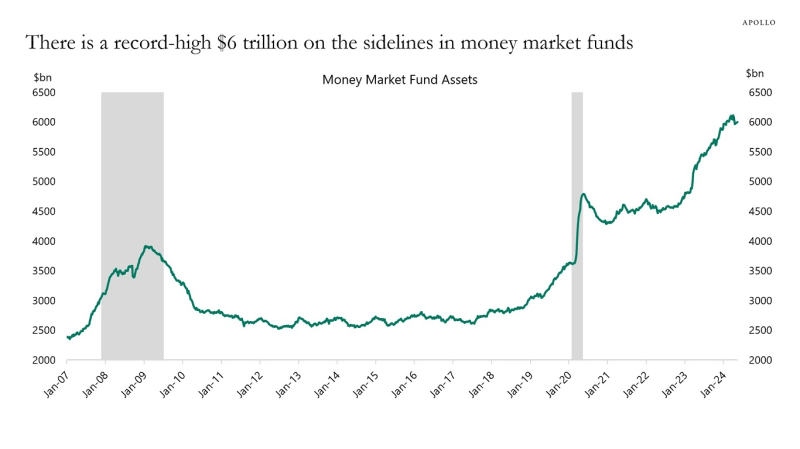
Source: Apollo
To bring the vacancy rate, both rental and homeowner, back in line with historical averages, the U.S. would need to add an additional 1.5 million vacant for-sale and for-rent homes.
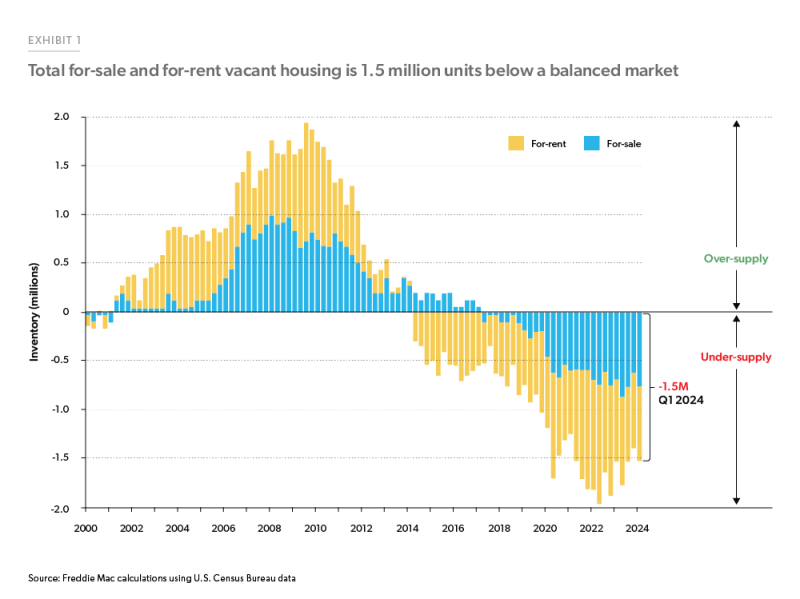
Source: Freddie Mac
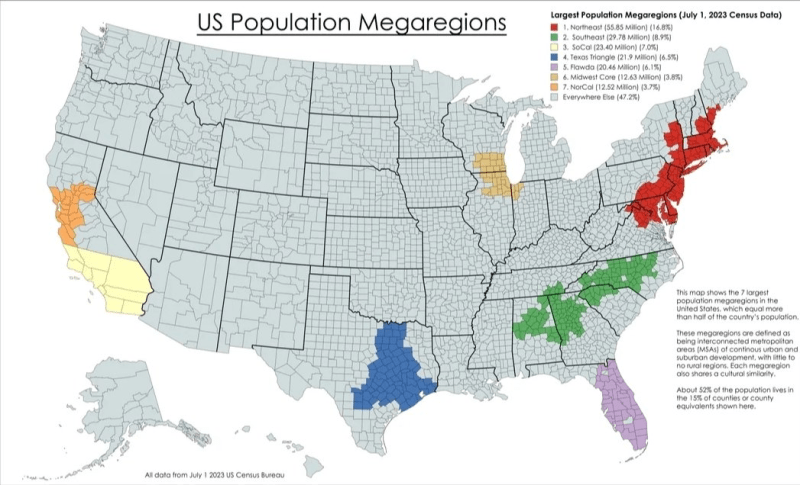
More than 50% of the population lives in the highlighted regions below:
Half of all renters are spending over 30% of their monthly income on rent. The red areas below denote regions where renters are spending above 50% of their monthly income on rent.


Source: Econbrowser

 Multifamily Market News