
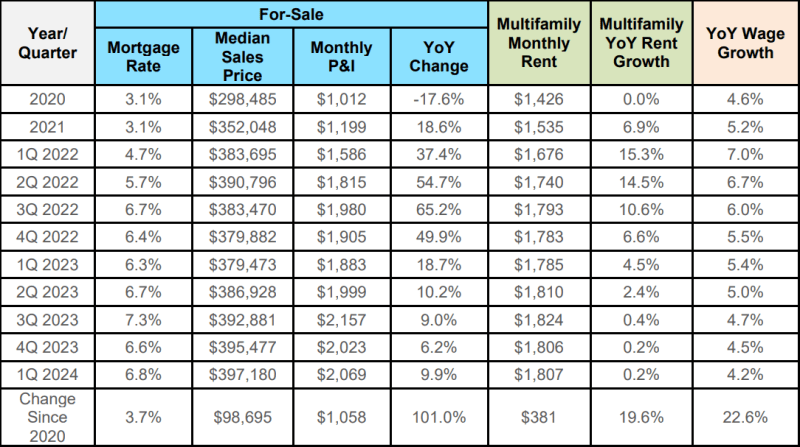
The chart below shows the rise in multifamily rents (19.6%) relative to wages (22.6%) since 2020, while monthly homeowner payments have risen by a staggering 101%.
Source: Freddie Mac
The chart below shows the rise in multifamily rents (19.6%) relative to wages (22.6%) since 2020, while monthly homeowner payments have risen by a staggering 101%.
Source: Freddie Mac

Note: These calculations determine the salary needed to afford the principal, interest, taxes, and insurance payments on a median-priced home in the corresponding metro area as of May 2024. Figures reflect homes with a 30-year fixed-rate mortgage and a 20% down payment.
Source: Home Sweet Home
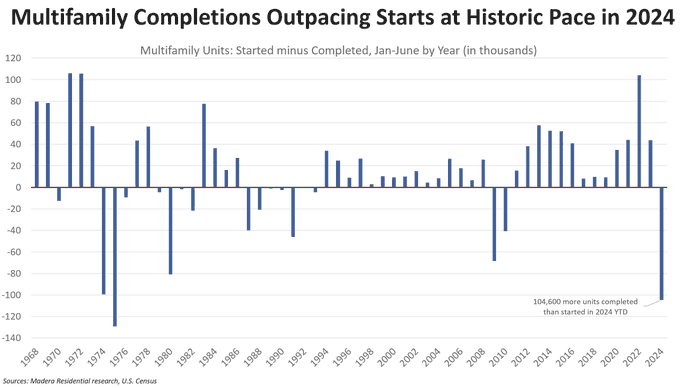
From Jay Parsons: “Multifamily starts trailed completions by 104,6000 units through the first half of 2024; the widest margin in 50 years, according to U.S. Census data. Yet another sign of a high-supply environment soon to give way to a low-supply era.”
From the Wall Street Journal:
Eviction filings over the past year in a half-dozen cities and surrounding metropolitan areas are up 35% or more compared with pre-2020 norms, according to the Eviction Lab, a research unit at Princeton University.
The elevated eviction filing rates in some places follow a sharp acceleration in rents, after pent-up demand during the pandemic flooded supply-short housing markets with people looking to rent. Those rent increases have pushed many lower-income tenants to the brink of what they can afford to spend.
Despite a softening over the past year, asking rents for houses and apartments nationwide rose 30% in the four years spanning 2020 to 2023, according to the Zillow Observed Rent Index.
Higher rents mean that even temporary income losses can be too much for tenants to ride out: About a quarter of renter households in America spend 50% or more of their income on housing, according to Harvard University’s Joint Center for Housing Studies.
Property-management software is also making it easier than ever to file evictions by automating parts of the process.
GoFundMe, a fundraising website, said eviction-related fundraisers nationally have risen by 40% since before the pandemic, including a 10% increase between May and June of this year.

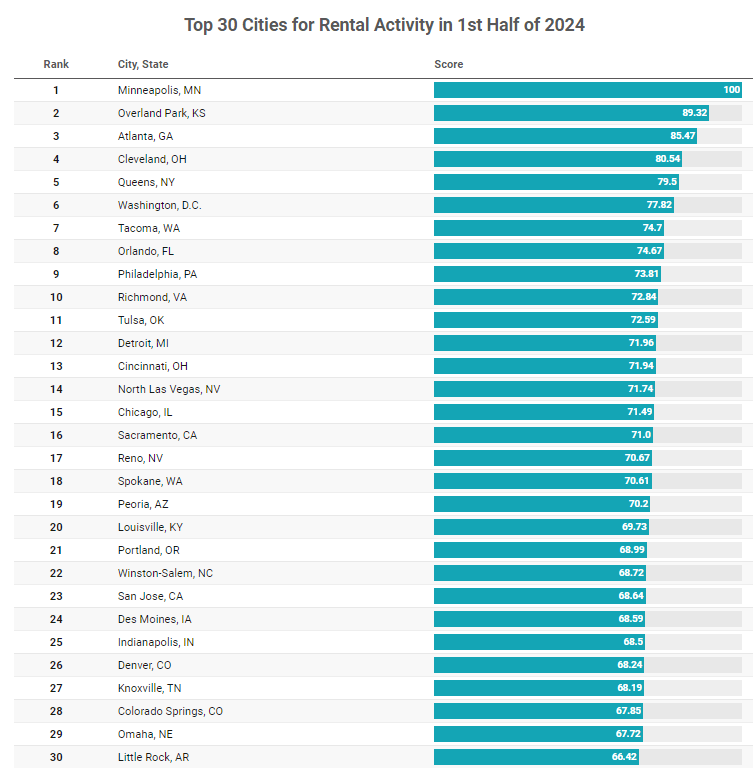
Methodology based on the following at RentCafe.com:
1. Availability Rate (Maximum score: 40 points), 2. Page Views (Maximum score: 30 points), 3. Favorites (Maximum score: 15 points), 4. Saved Searches (Maximum score: 15 points)
Home insurers are pushing for big rate increases and weakened consumer protections—and increasingly getting what they ask for.
State regulators across the U.S. appear to be buckling to industry demands for fear that insurers will pack up and exit their regions, leaving residents with few coverage options.
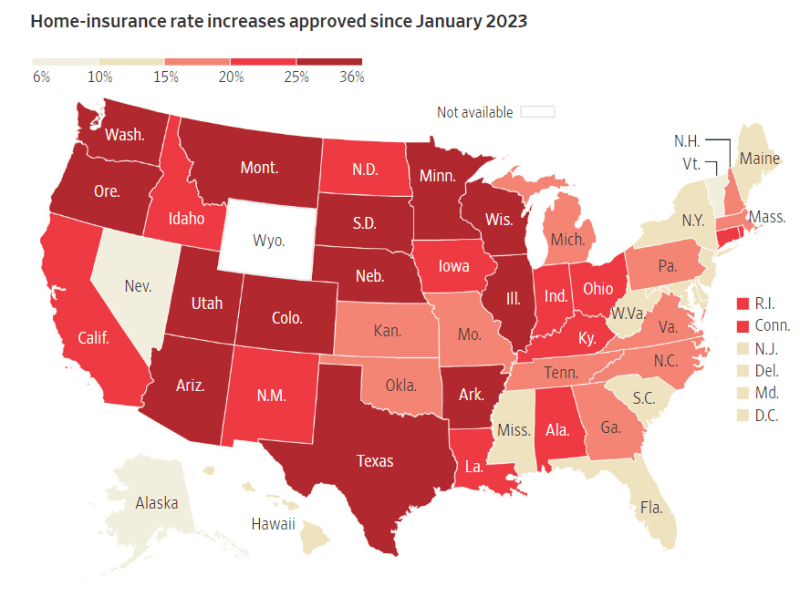
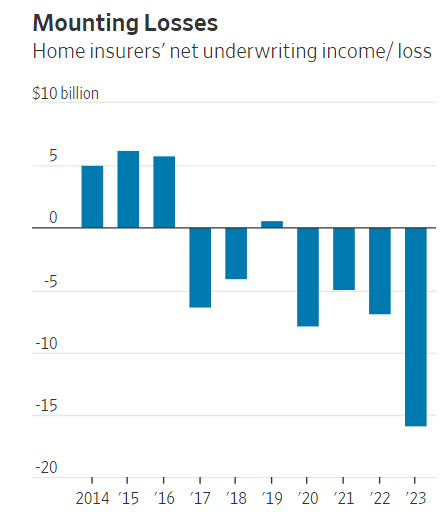
Source: Wall Street Journal
To rank America’s Top States for Business in 2024, CNBC scored all 50 states on 128 metrics in 10 broad categories of competitiveness. North Carolina received 1,592 out of a maximum 2,500 points. North Carolina finished only 3 points behind first place Virginia (after finishing first the last two years and second in 2021).
South Carolina ranked 19 on the list.
Source: CNBC and Charlotte Business Journal
The U.S. added 275,000 apartment renters in the first half of 2024, the second largest of any first half since 2000.

Source: Jay Parsons
 Multifamily Market News