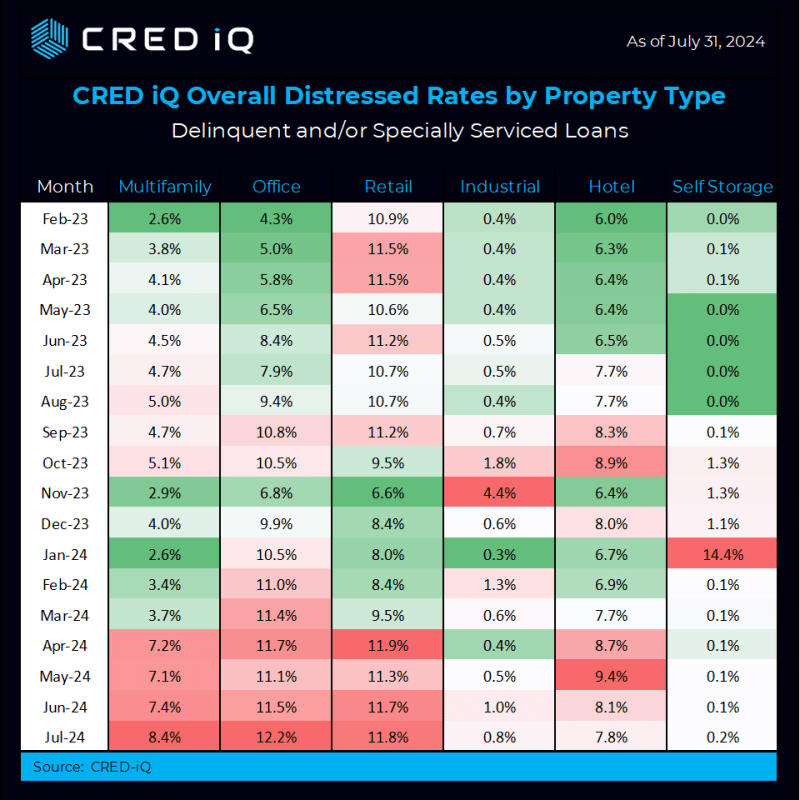
CMBS loans make up a small percentage of the total multifamily debt, but the number of loans distressed within that sector has grown dramatically over the last 7 months.
Source: Cred iQ
CMBS loans make up a small percentage of the total multifamily debt, but the number of loans distressed within that sector has grown dramatically over the last 7 months.
Source: Cred iQ
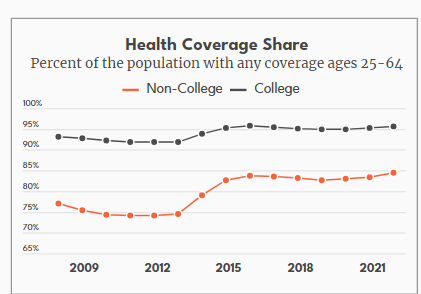
The pandemic recession was an unusual business cycle for Americans without a college degree in many positive respects. Non-college Americans are better off than in 2019 and, in some cases, better off than the hot economy of the late-1990s/early-2000s across a wide array of measures. Many of these Americans start out as renters, which demonstrates why multifamily rents were able to rise so significantly in 2020 – 2022 and have stayed high in most markets.


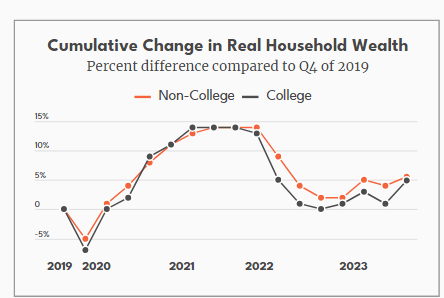

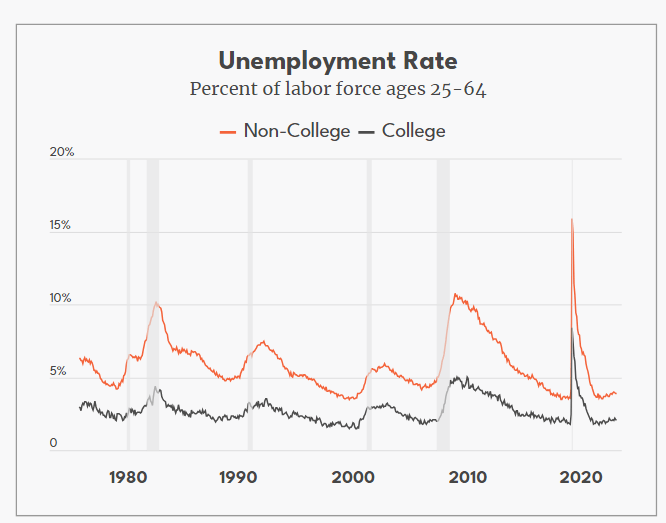
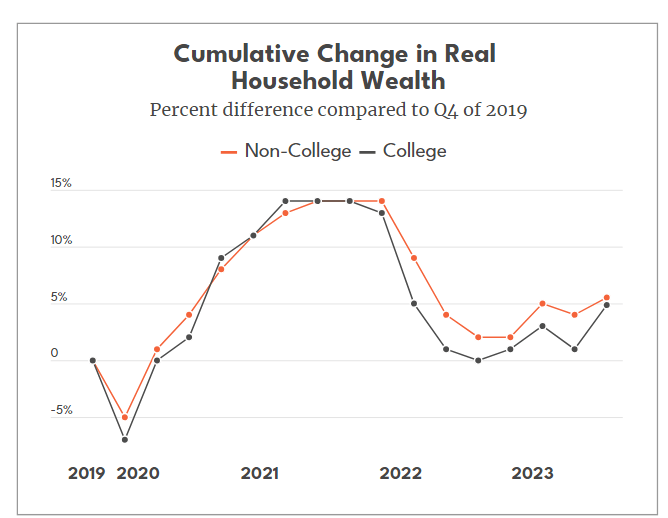
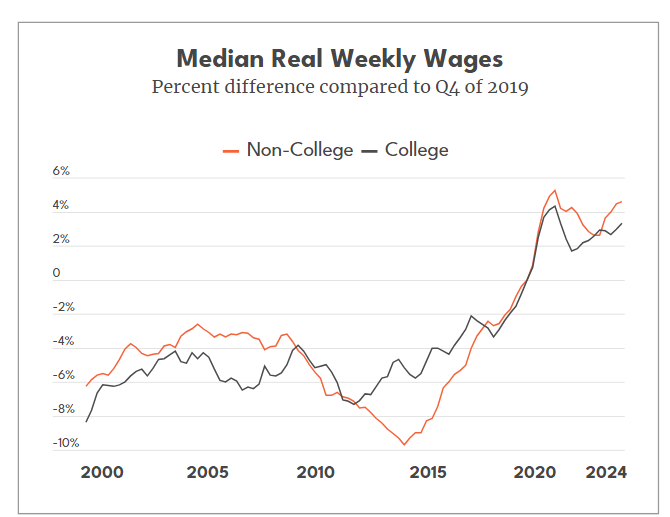
Source: Third Way
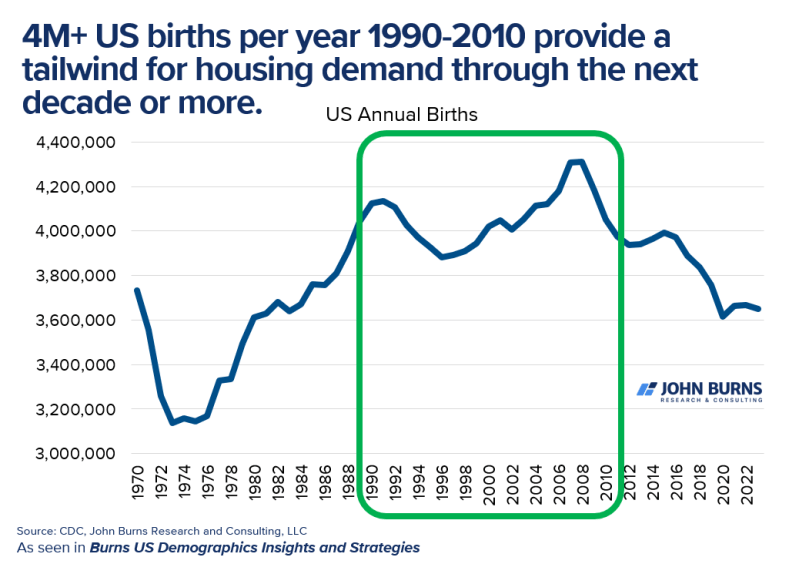
The most common age in the United States is people who are 31 and 32. Births spiked in the 1990s and first decade of this century, peaking around 2007/2008:
Source: A Wealth Of Common Sense
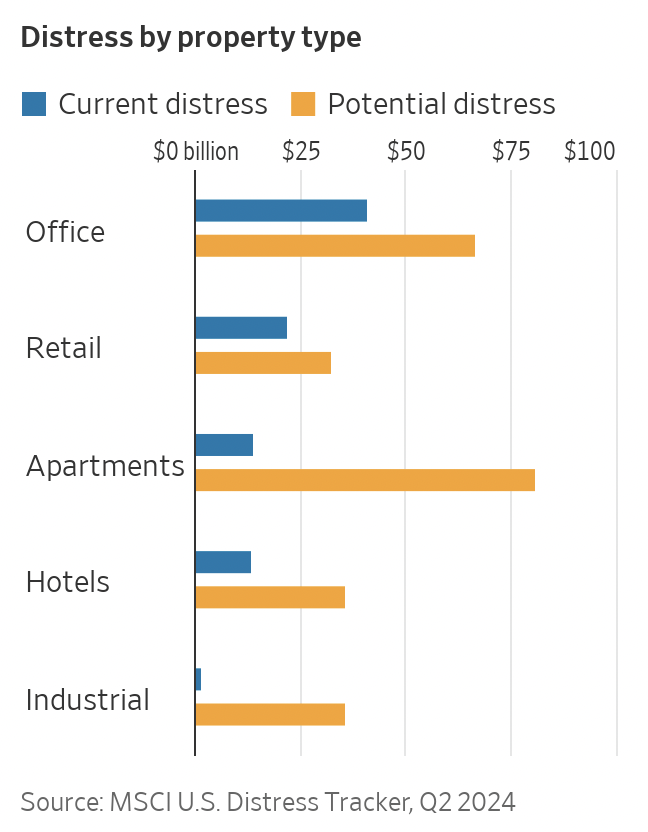
The orange represents falling occupancy where the income is just enough to meet interest payments.
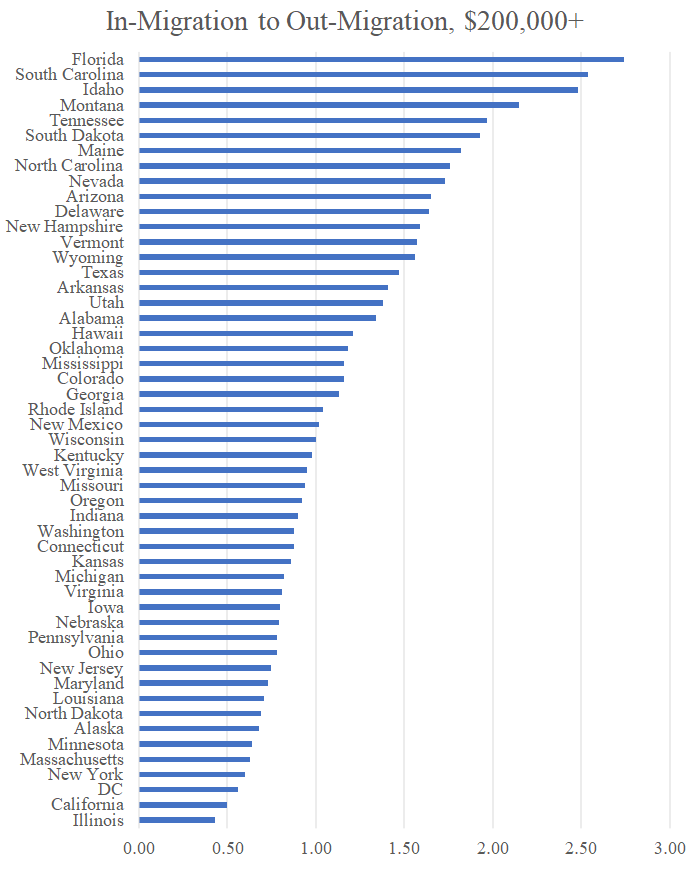
While most of the people in this income bracket will become single-family homeowners, many of them rent for at least a year when they move to a new state.
1.0 is the break-even point (less than that number means you have a larger number of move-outs vs. move-ins).
From Apartment List:
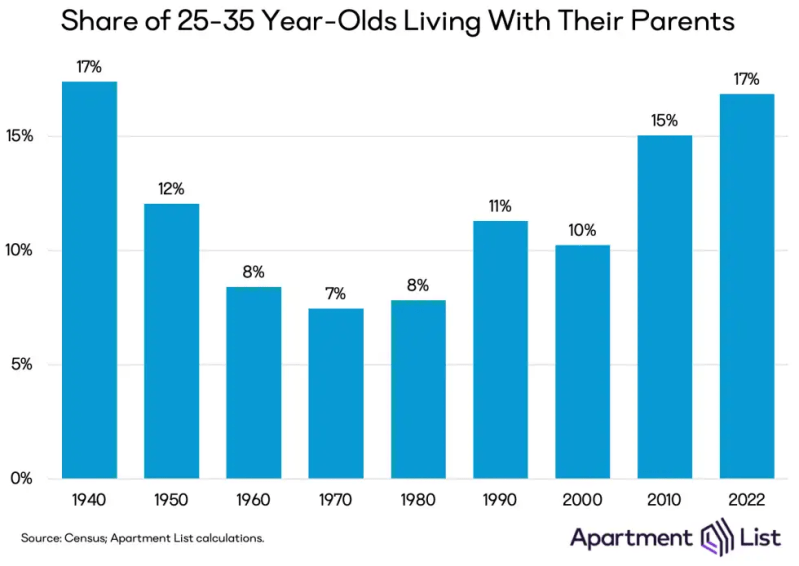
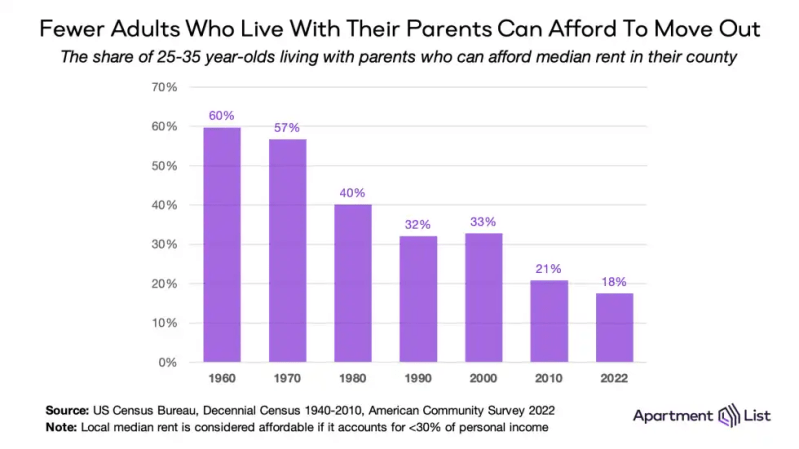
In the face of waning housing affordability, a growing number of Americans are continuing to live with their parents into adulthood. In 1970, just 7 percent of 25 to 35 year-olds lived in their parents’ homes, but as of 2022, that share has more than doubled to 17 percent.
When viewed over a long horizon, the share of young adults who live with their parents1 exhibits a U-shaped trend. In 1940, with the Great Depression still close in the rearview mirror, 17 percent of 25 to 35 year-olds lived at home. But in the ensuing decades, the postwar economic boom and rapid buildup of America’s suburbs enabled more young people to strike out on their own. From 1940 to 1960, the share of young adults living at home fell by more than half to 8 percent, and remained fairly stable at that level through 1980.


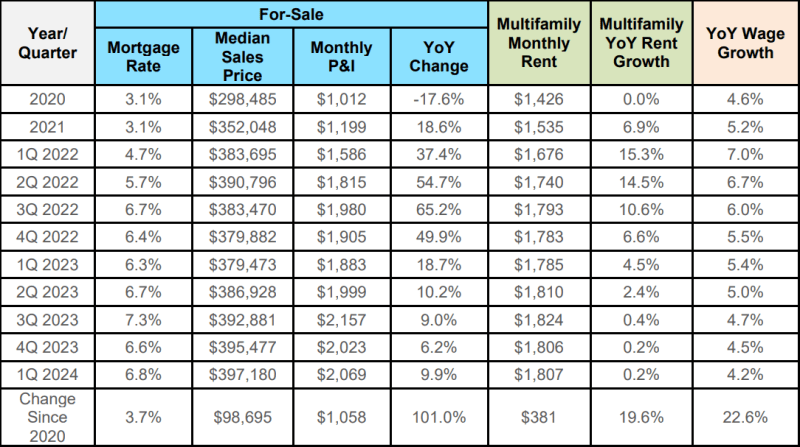
The chart below shows the rise in multifamily rents (19.6%) relative to wages (22.6%) since 2020, while monthly homeowner payments have risen by a staggering 101%.
Source: Freddie Mac

Note: These calculations determine the salary needed to afford the principal, interest, taxes, and insurance payments on a median-priced home in the corresponding metro area as of May 2024. Figures reflect homes with a 30-year fixed-rate mortgage and a 20% down payment.
Source: Home Sweet Home
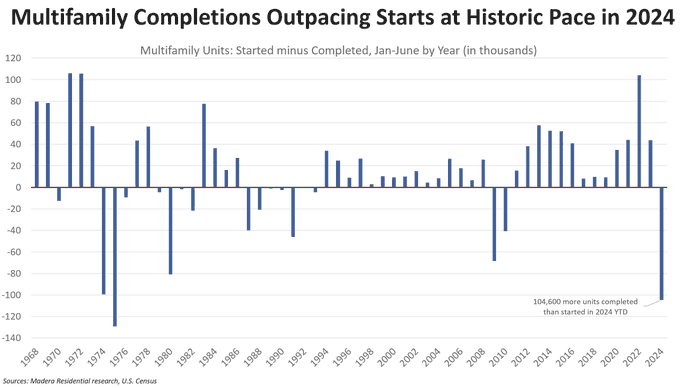
From Jay Parsons: “Multifamily starts trailed completions by 104,6000 units through the first half of 2024; the widest margin in 50 years, according to U.S. Census data. Yet another sign of a high-supply environment soon to give way to a low-supply era.”