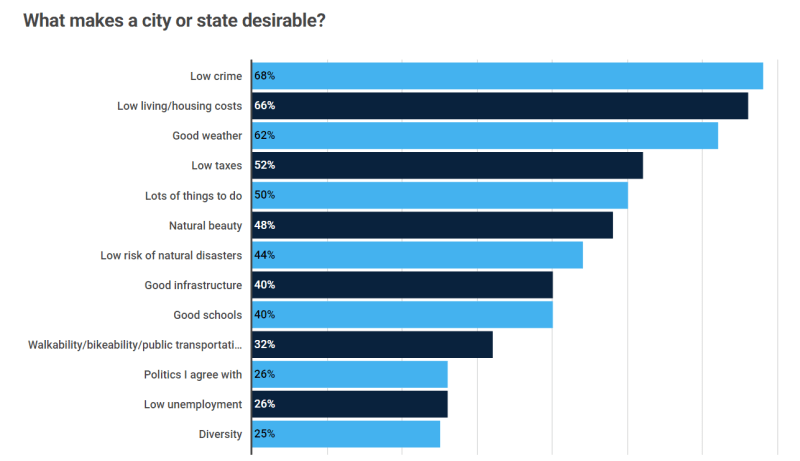
Clever’s Best Places To Live In America In 2024

10 Most Desirable Cities to Live

  1. Tampa, FL
  2. Charlotte, NC
  3. Virginia Beach, VA
  4. Nashville, TN
  5. Orlando, FL
  6. Raleigh, NC
  7. Atlanta, GA
  8. Denver, CO
  9. Las Vegas, NV
  10. Miami, FL

Americans say the most desirable midsize cities are:

  1. Honolulu, HI
  2. Colorado Springs, CO
  3. Charleston, SC
  4. Cape Coral, FL
  5. Palm Bay, FL
  6. Winston, NC
  7. Tucson, AZ
  8. Albuquerque, NM
  9. Greenville, SC
  10. Augusta, GA

Americans say the 10 most underrated cities in the U.S. are:

  1. Charlotte, NC
  2. Virginia Beach, VA
  3. Austin, TX
  4. Raleigh, NC
  5. Tampa, FL
  6. Boston, MA
  7. Seattle, WA
  8. Baltimore, MD
  9. Atlanta, GA
  10. Buffalo, NY

Source: Clever
2024 Multifamily: High Supply, High Demand, Rising Rents, Rising Cap Rates

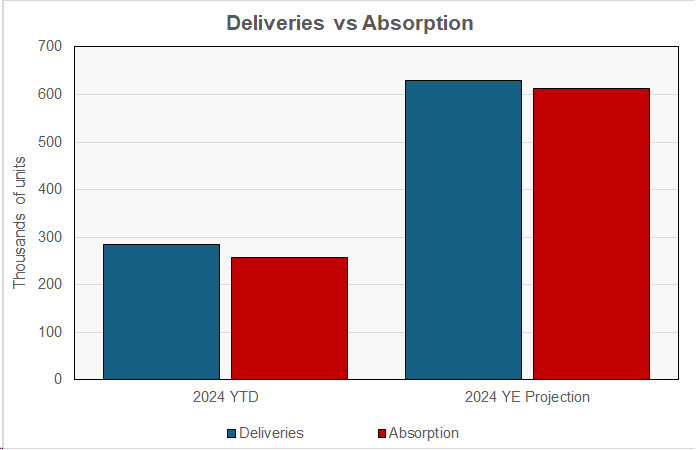
Berkadia anticipates that 2024 will have the highest number of deliveries in this cycle with 283,653 units already delivered in the first half of the year. By year-end, 629,153 new units are expected to hit the market. Berkadia expects net absorption of 612,115 units by year-end, equivalent to 97.3 percent of the new supply. This will result in the current occupancy rate of 94.2 percent rising slightly by the end of the year.

Lease renewals performed better with average rent growth of 4.1 percent in Q2, with 54.3 percent of renters choosing to renew their leases. This renewal rate is up from the pre-pandemic average of 51.7 percent.

The following table gives the mid-year sales statistics for the last 3 years as reported by Berkadia.

Statistic202220232024
Volume – billions$59.3$14.6$18.4
Transactions738184239
Average rent$1,736$1,809$1,828
Cap rate4.05.25.6
Units/property303318304
Average Year Built200019992000

Source: YieldPro & Berkadia

Where Class C Rents Are Falling Hardest

Where are Class C rents growing most? In markets with little new supply. Class C rent growth topped 4% in 22 of the nation’s 150 largest metro areas, and nearly all of them have limited new apartment supply.

Most new construction tends to be Class A “luxury” because that’s what pencils out due to the high cost of everything from land to labor to materials to impact fees to insurance to taxes, etc., but when you build “luxury” apartments at scale, you will put downward pressure on rents at all price points.

Source: Jay Parsons

A Visual Walkthrough Of Renters’ Wage & Wealth Growth Since The Pandemic

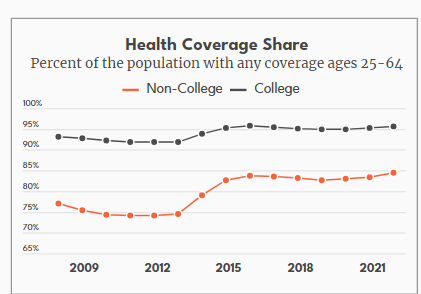
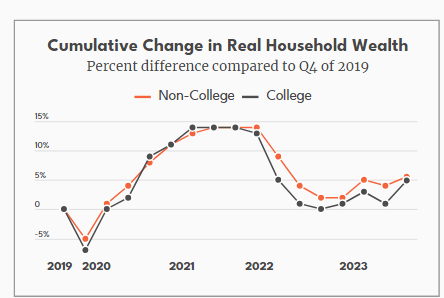
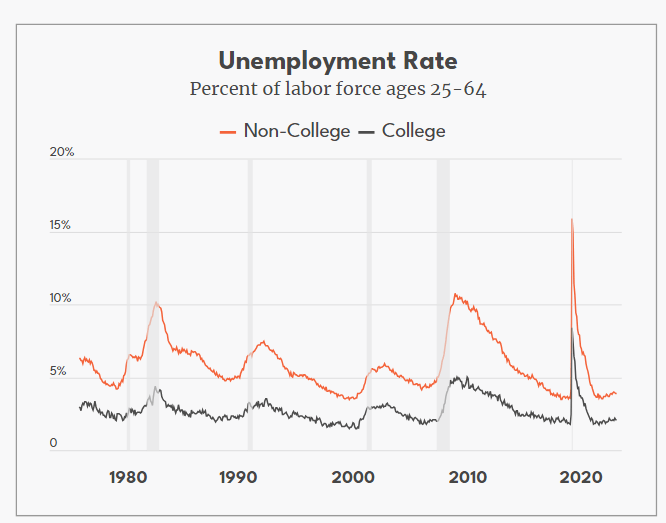
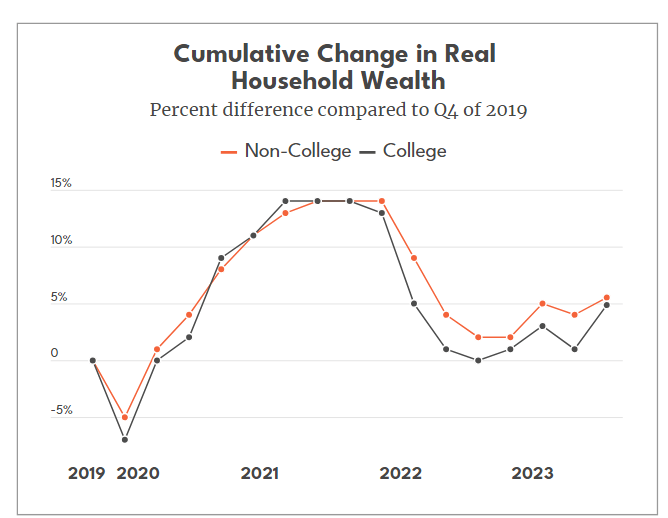
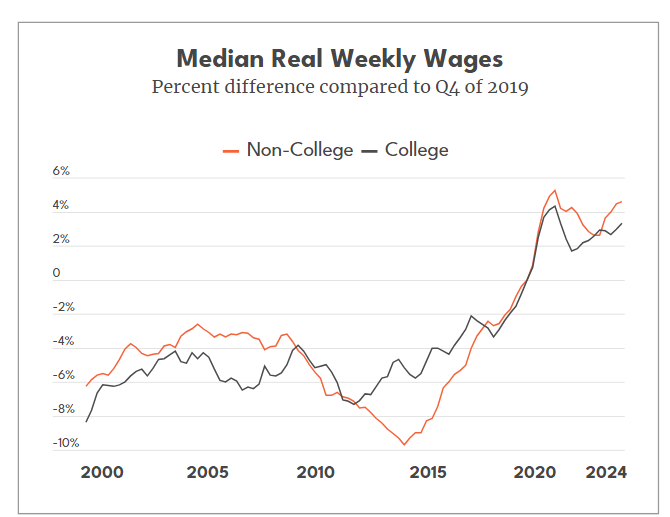
The pandemic recession was an unusual business cycle for Americans without a college degree in many positive respects. Non-college Americans are better off than in 2019 and, in some cases, better off than the hot economy of the late-1990s/early-2000s across a wide array of measures. Many of these Americans start out as renters, which demonstrates why multifamily rents were able to rise so significantly in 2020 – 2022 and have stayed high in most markets.

Source: Third Way

Competition For Rental Units – Mom & Dad’s House

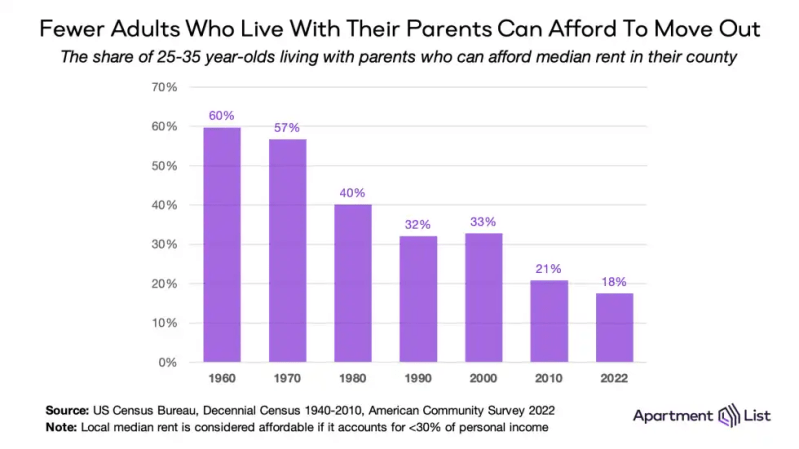
From Apartment List:

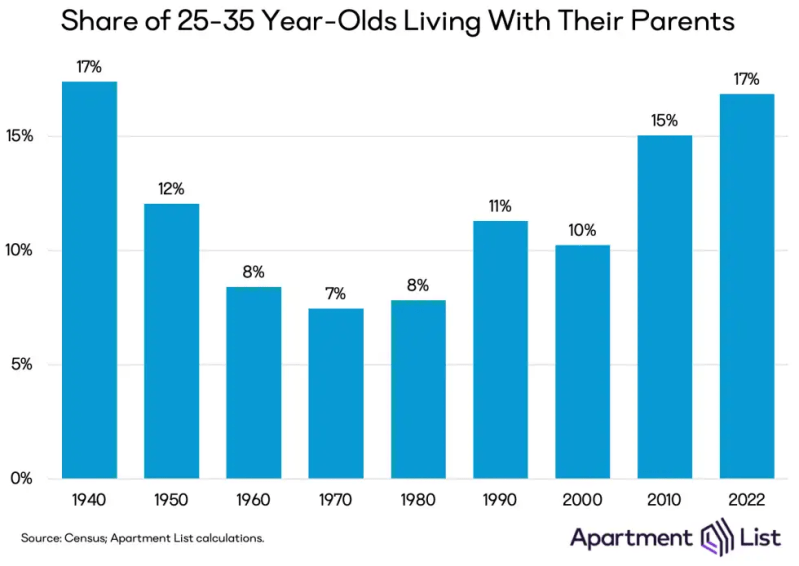
In the face of waning housing affordability, a growing number of Americans are continuing to live with their parents into adulthood. In 1970, just 7 percent of 25 to 35 year-olds lived in their parents’ homes, but as of 2022, that share has more than doubled to 17 percent.

When viewed over a long horizon, the share of young adults who live with their parents1 exhibits a U-shaped trend. In 1940, with the Great Depression still close in the rearview mirror, 17 percent of 25 to 35 year-olds lived at home. But in the ensuing decades, the postwar economic boom and rapid buildup of America’s suburbs enabled more young people to strike out on their own. From 1940 to 1960, the share of young adults living at home fell by more than half to 8 percent, and remained fairly stable at that level through 1980.