From CBRE’s Higher-For-Longer Rates report:
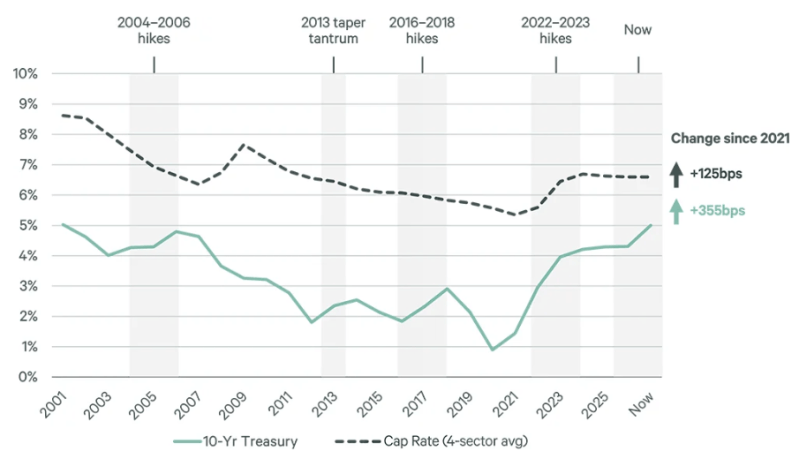
The 10-year Treasury yield has remained near or above 5% since Sept. 10, its highest level since 2007. The spread between the average commercial real estate cap rate and the 10-year Treasury yield has compressed to about 160 basis points (bps), a record low and well under its long-run average of roughly 325 bps.
With the spread to the 10-year Treasury yield so narrow, cap rates have moved higher as rates increased. The pressure is greatest on multifamily and industrial asset pricing, where cap rate spreads to the 10-year Treasury yield are historically compressed at less than 100 bps.
CBRE expects cap rates will generally rise by at least 40 to 60 bps over the near-term implying value declines of 6% to 10%. Rent growth likely will not offset the higher cost of debt capital.
Higher-for-longer rates open opportunities in prime office and retail assets, as well as debt investments. Sectors facing a supply overhang and looming debt maturities, such as Sun Belt multifamily, could present opportunities for well-capitalized buyers to purchase assets at a discount.
Cap rates have already begun to rise, with deals under contract being retraded and some planned sales turning into refinancings instead. Cap rate increases of 40 to 60 bps imply average property value declines of 6% to 10%. Multifamily and industrial assets, which have the lowest cap rates and thinnest spreads, are likely to feel the effects most acutely. Prime office and retail assets, by contrast, trade at wider spreads to the 10-year Treasury yield, so there will be less impact on their cap rates.
The spread between cap rates (dotted line) and the 10-year treasury (solid line):